
Lesley Dumbrell creates art of pure visual pleasure.
artwork
Paintings
Sculptures
Works on Paper
Paintings
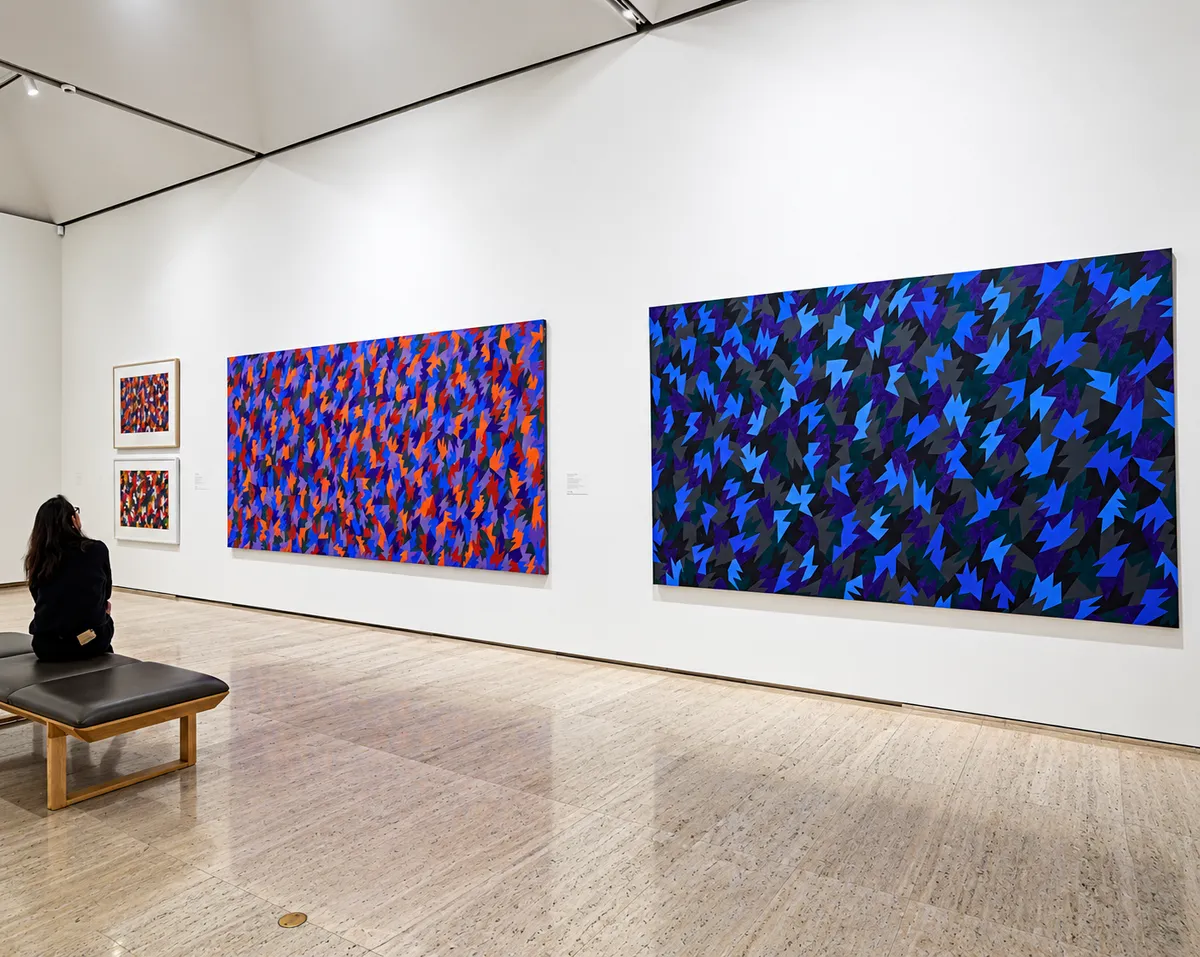
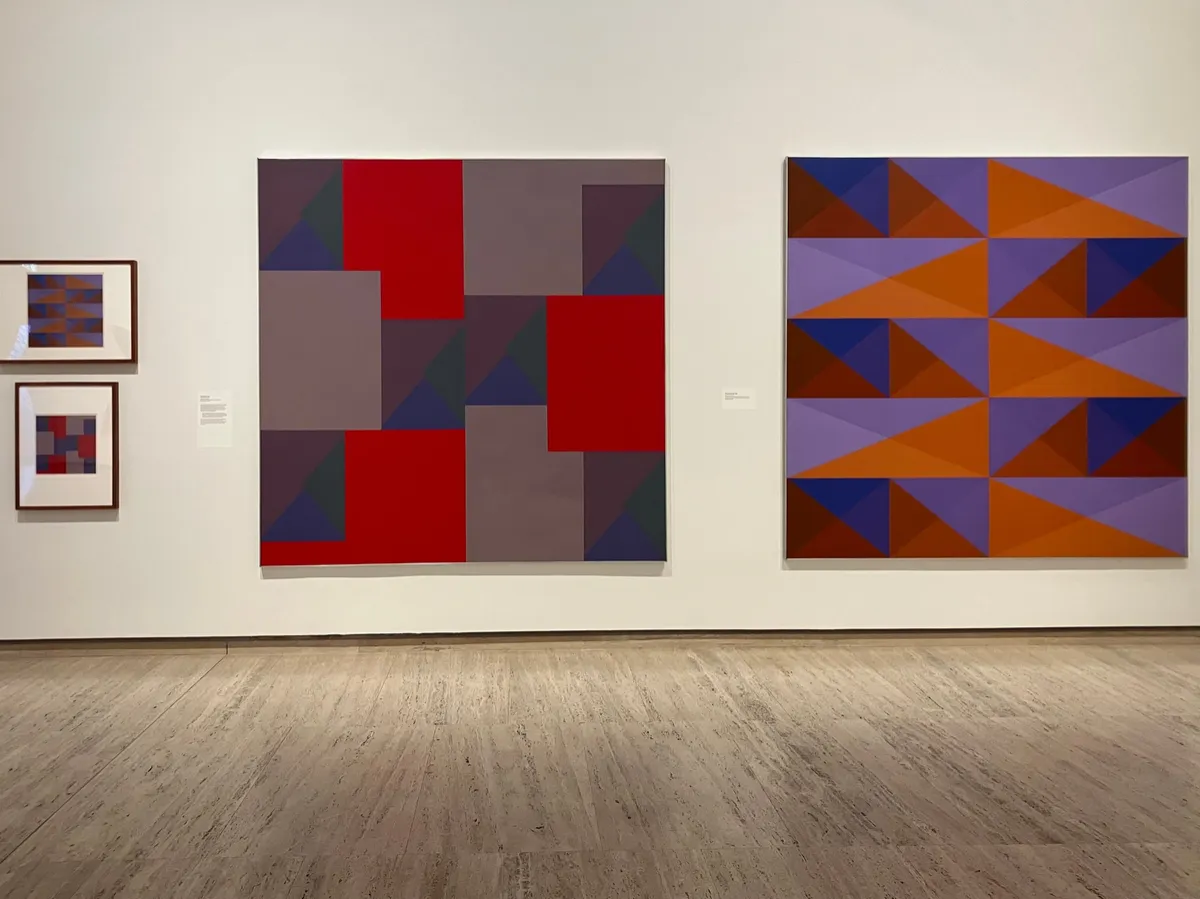
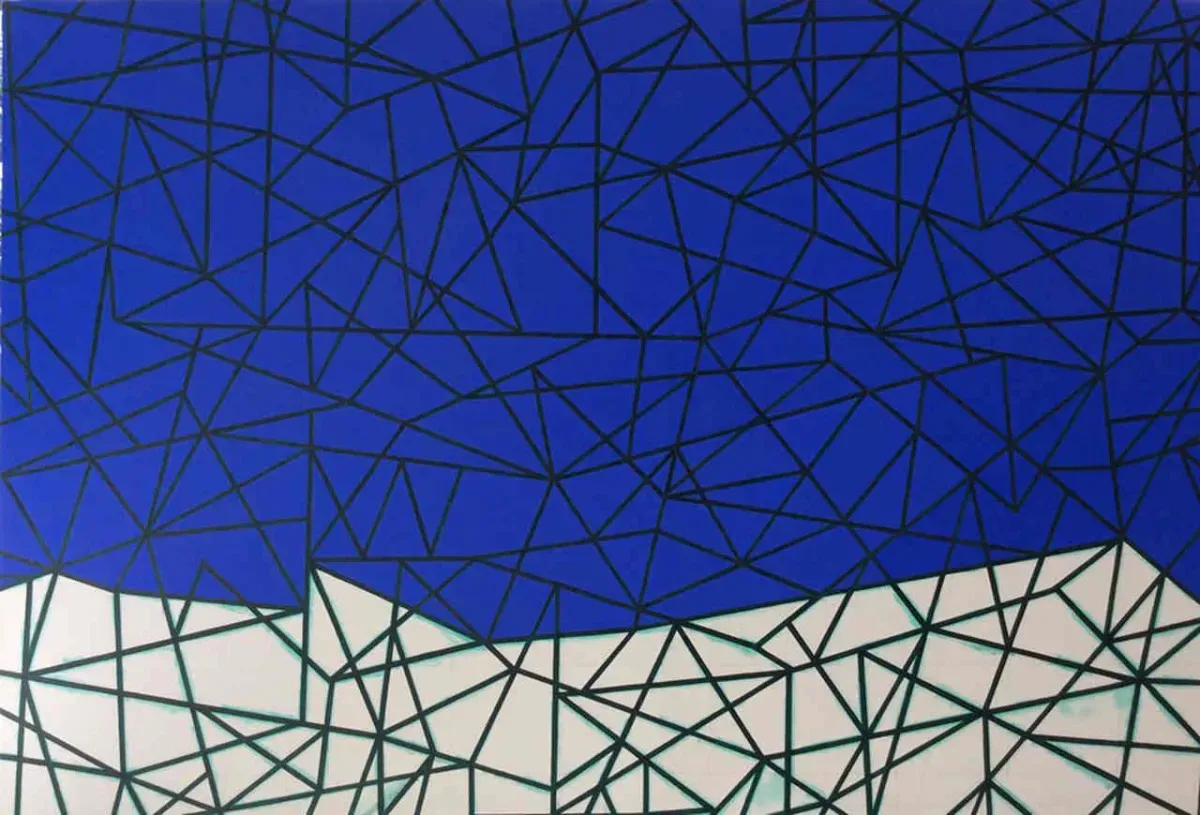
Lesley Dumbrell's paintings are celebrated for their precise geometric abstraction and masterful exploration of colour, rhythm, and optical effects. Since the 1960s, she has developed a distinctive visual language that translates intangible natural forces—wind, light, and atmosphere—into hypnotic compositions of line and hue.
A standout work from this period is Solstice (1974), an exceptional optical painting held in the Art Gallery of New South Wales collection. Composed of vertical blue lines overlaid with a repeated pattern of orange, pink, and green triangles, Solstice produces a mesmerising, almost vibrating effect that exemplifies Dumbrell's command of colour interaction and pattern.
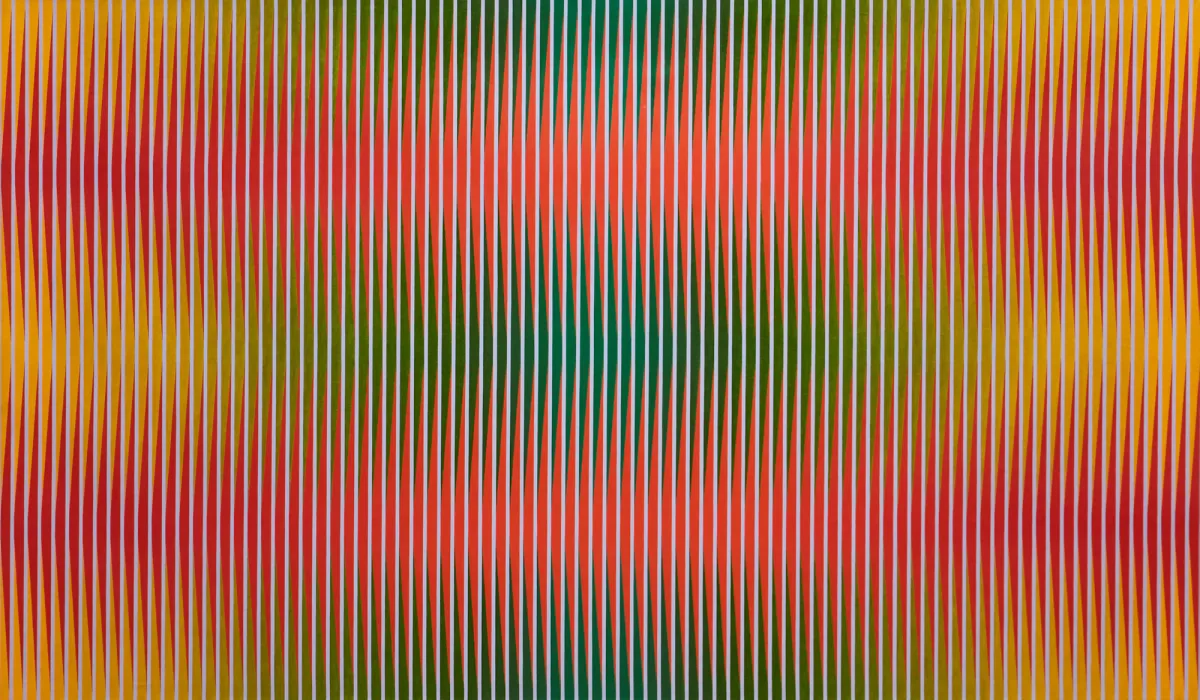
Solstice, 1974 — Liquitex on canvas, 173 × 296 cm.
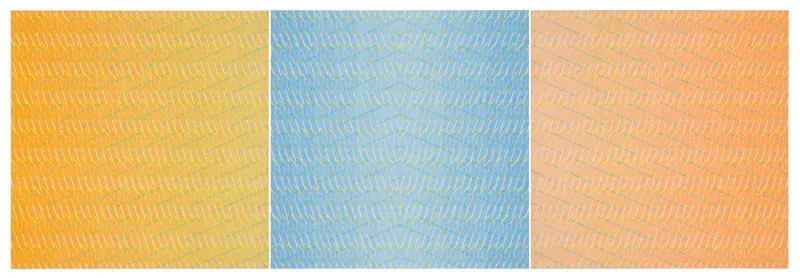
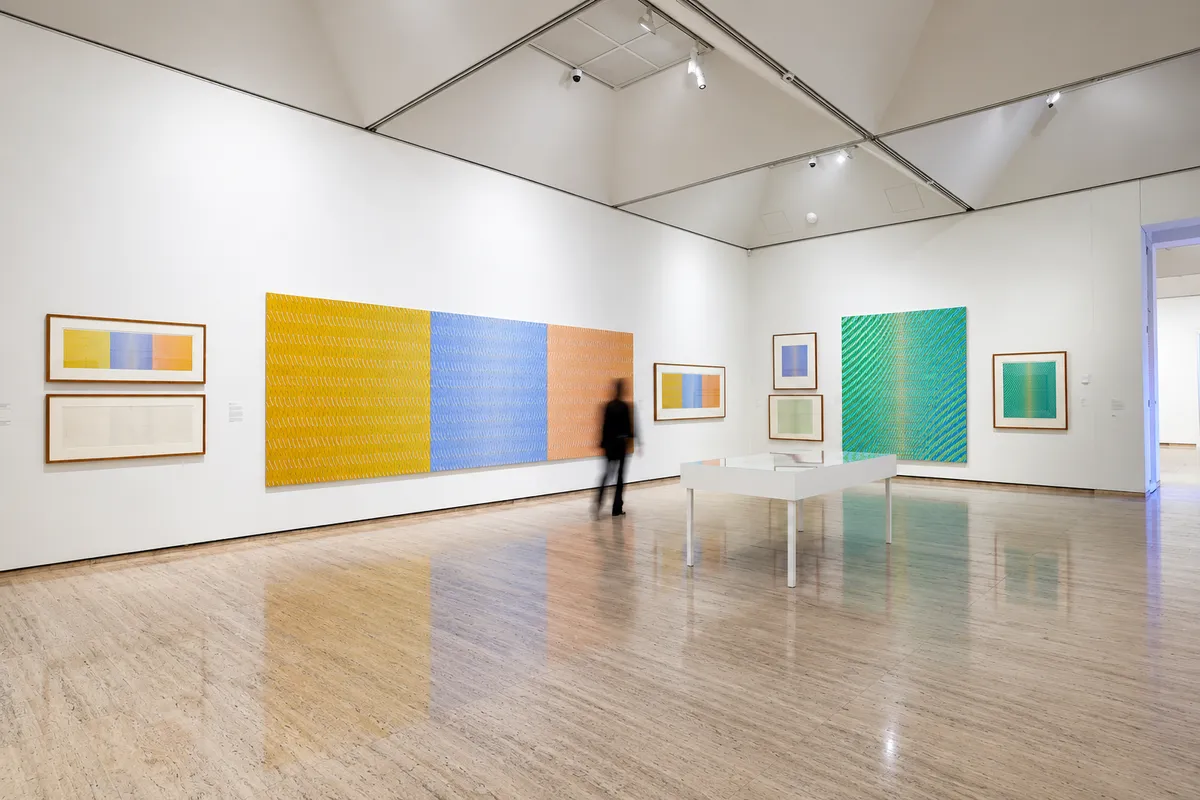
February (1976), synthetic polymer paint on canvas, 244 × 549 cm
Another landmark painting is February (1976), a monumental triptych measuring 5.5 metres in width, held by the National Gallery of Australia. This ambitious work took approximately six months to complete and demonstrates Dumbrell's capacity for large-scale optical compositions that evoke the movement and intangibility of natural phenomena.
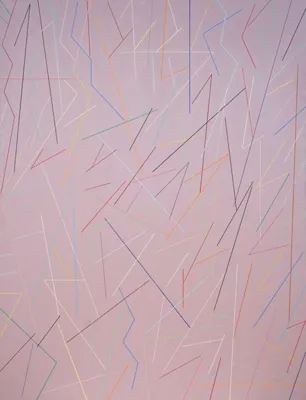
Foehn (1975), in the National Gallery of Australia collection, captures the movement of wind through cropped and apparently curving lines that create a blooming, dynamic visual effect. Along with Zephyr (1975) and Ripple (1972), Foehn exemplifies Dumbrell's ability to convey the sensation of atmospheric forces through abstract geometric means.
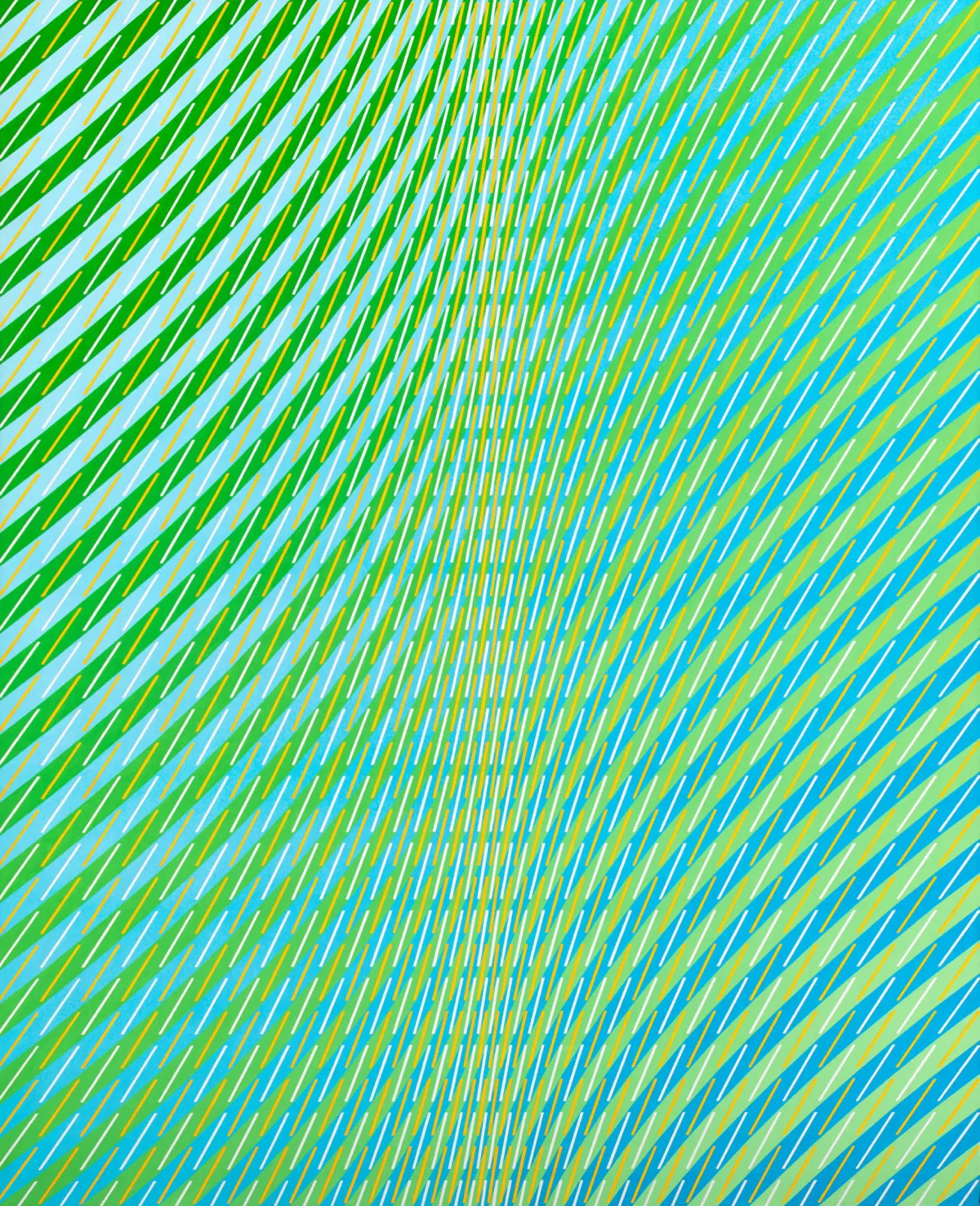
Foehn (1975), synthetic polymer paint on canvas, 247.3 × 199.8 cm.
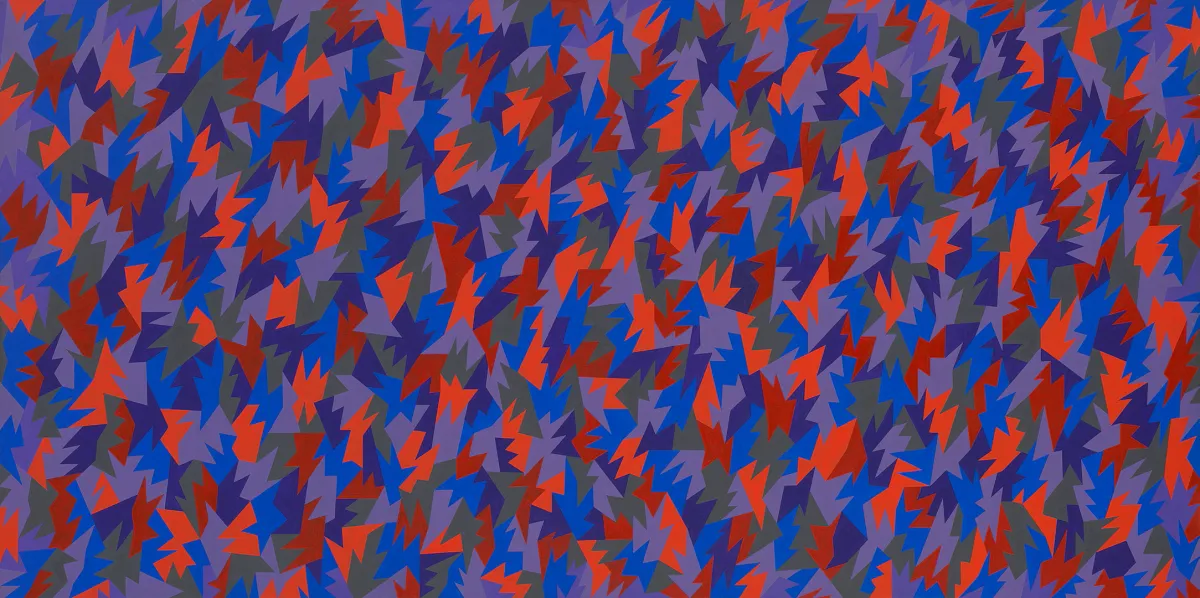
Tramontana (1984), synthetic polymer paint on canvas,
182.8 × 365.4 cm.
Tramontana (1984), held by the National Gallery of Victoria, represents Dumbrell's mature period of interlocking coloured shapes that span the canvas. This expansive work (182.8 × 365.4 cm) demonstrates her continued refinement of geometric abstraction infused with colour, light, and emotion.
Scrulpture
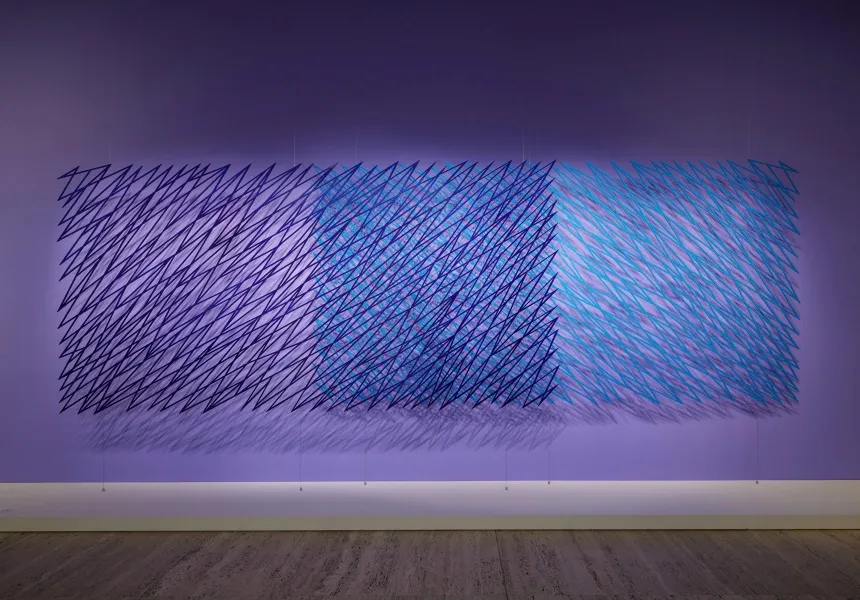
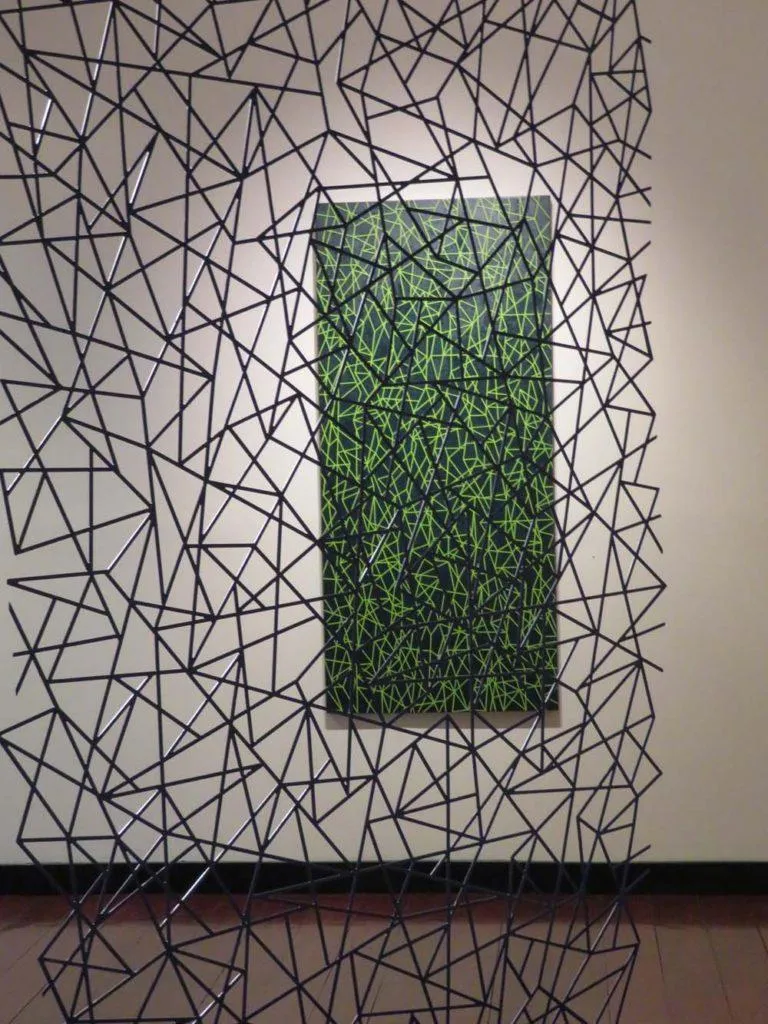
Since 2015, Lesley Dumbrell has extended her practice into three-dimensional work, creating laser-cut and water-jet-cut metal sculptures that translate her two-dimensional grid structures into physical space. These sculptures represent the latest evolution in a career characterised by intuition, experimentation, and play, allowing Dumbrell to explore colour and form in new spatial contexts.
Riddle (2020) is a significant sculptural work that serves as a two-dimensional rendition of a three-dimensional metal grid. Featured as the final work in the Thrum retrospective at the Art Gallery of New South Wales, Riddle exemplifies Dumbrell's ongoing investigation of the grid structure and its capacity to create visual rhythm and depth when realised in metal.
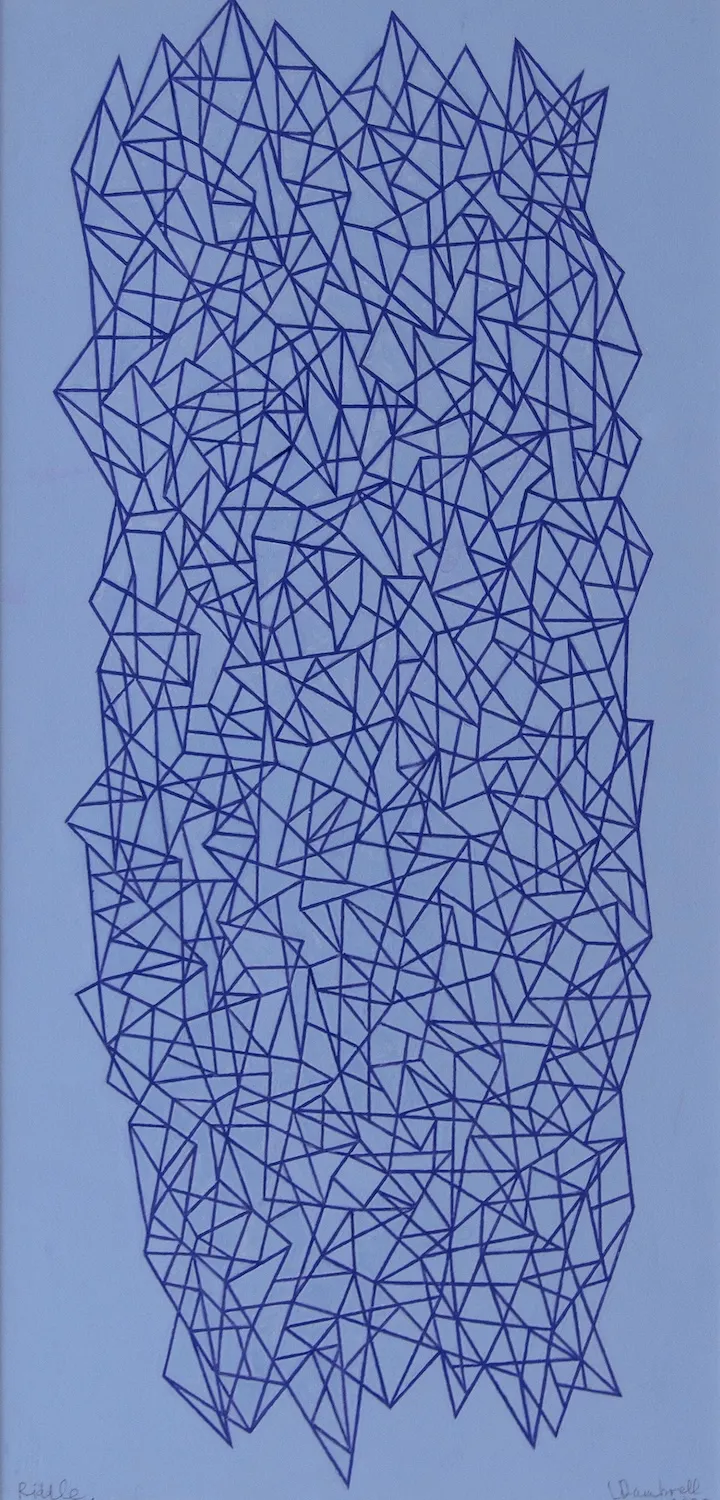
Riddle (2020), laser-cut metal. Art Gallery of New South Wales, Sydney.
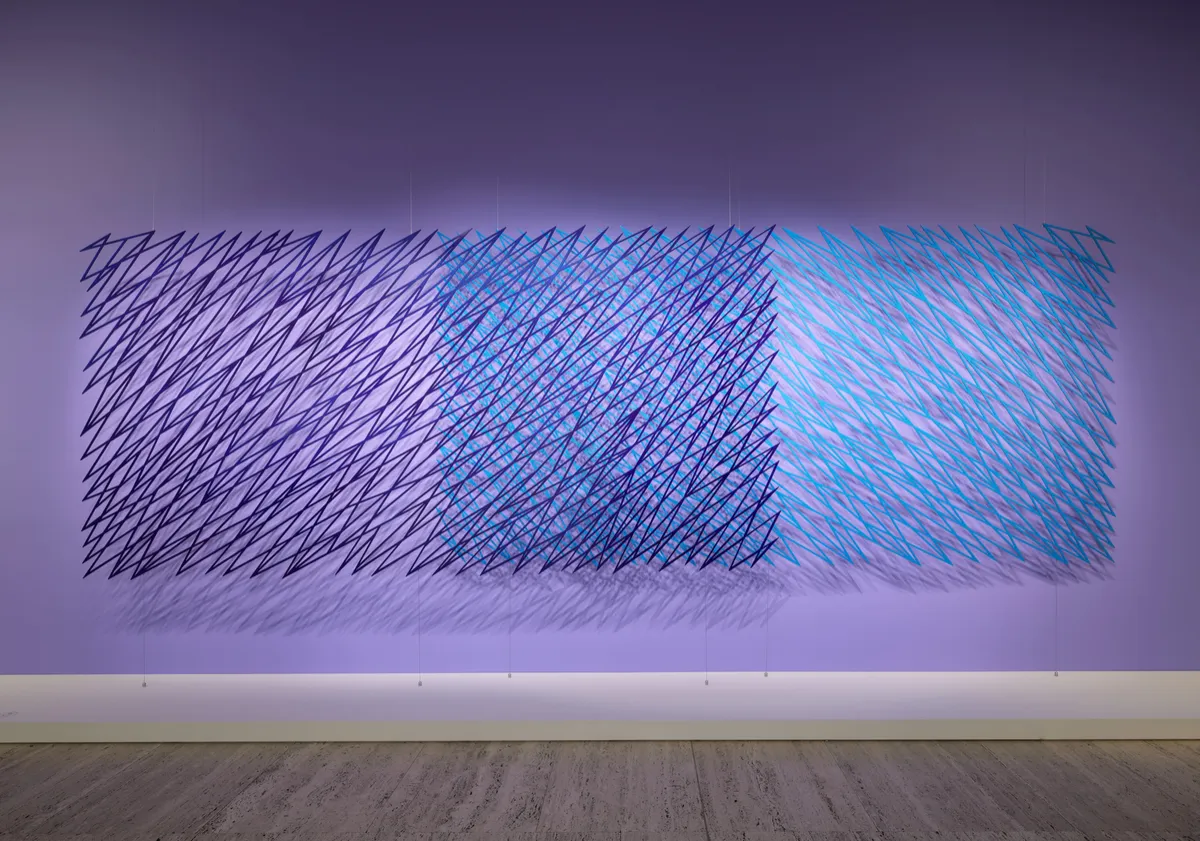
Recent water-jet-cut metal sculpture featured in Lesley Dumbrell: Thrum, 2024.
Dumbrell's sculptural works are created using water-jet cutting technology, which allows for precise, intricate patterns that echo the linear and geometric motifs of her paintings. Close up, these later works twinkle and shimmer, extending the optical effects of her paintings into physical form.
Installation view of Lesley Dumbrell's laser-cut metal sculptures at Lesley Dumbrell: Thrum, Art Gallery of New South Wales, 2024.
These sculptures are not only standalone works but also relate to her works on paper, which since 2015 have served as studies for future three-dimensional pieces. Now in her eighties, Dumbrell continues to push the boundaries of her practice, with laser-cut metal sculptures representing the latest advance in a career spanning over six decades.
Work On Paper
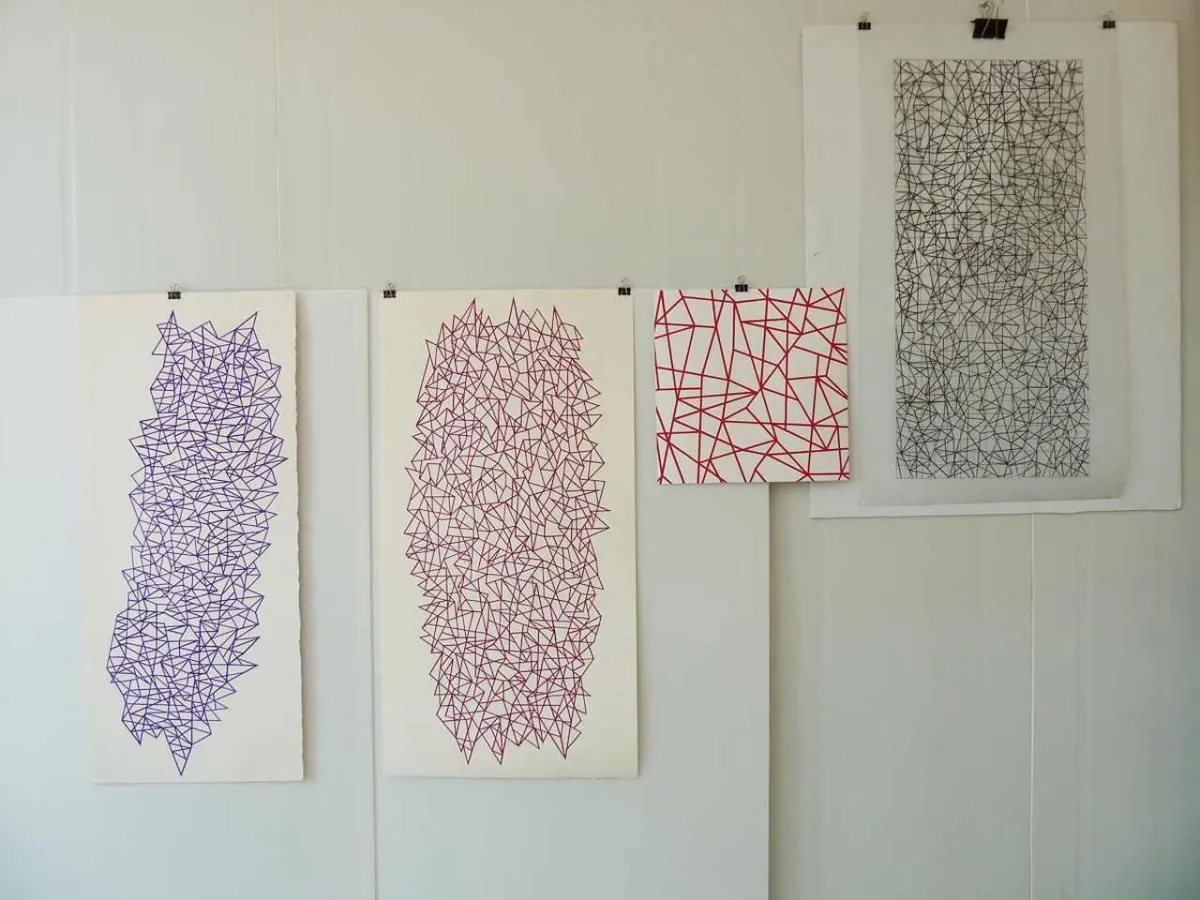
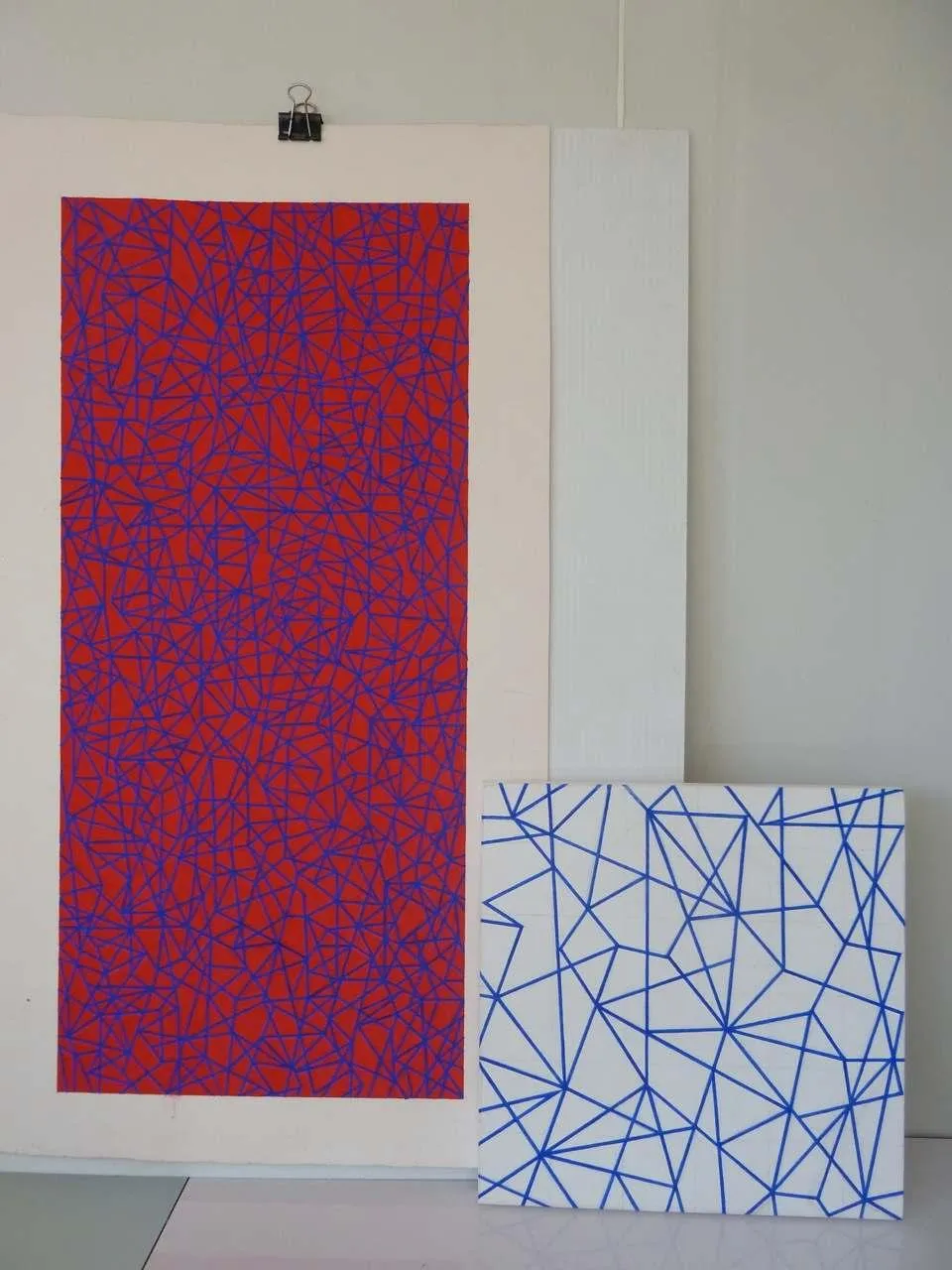
Throughout her entire career, Lesley Dumbrell has maintained a parallel practice of watercolour and gouache on paper, producing both stand-alone works and detailed studies for her larger paintings. These works on paper are where Dumbrell "nuts out" the composition and colour plan for larger works—a meticulous process that can take weeks or months.
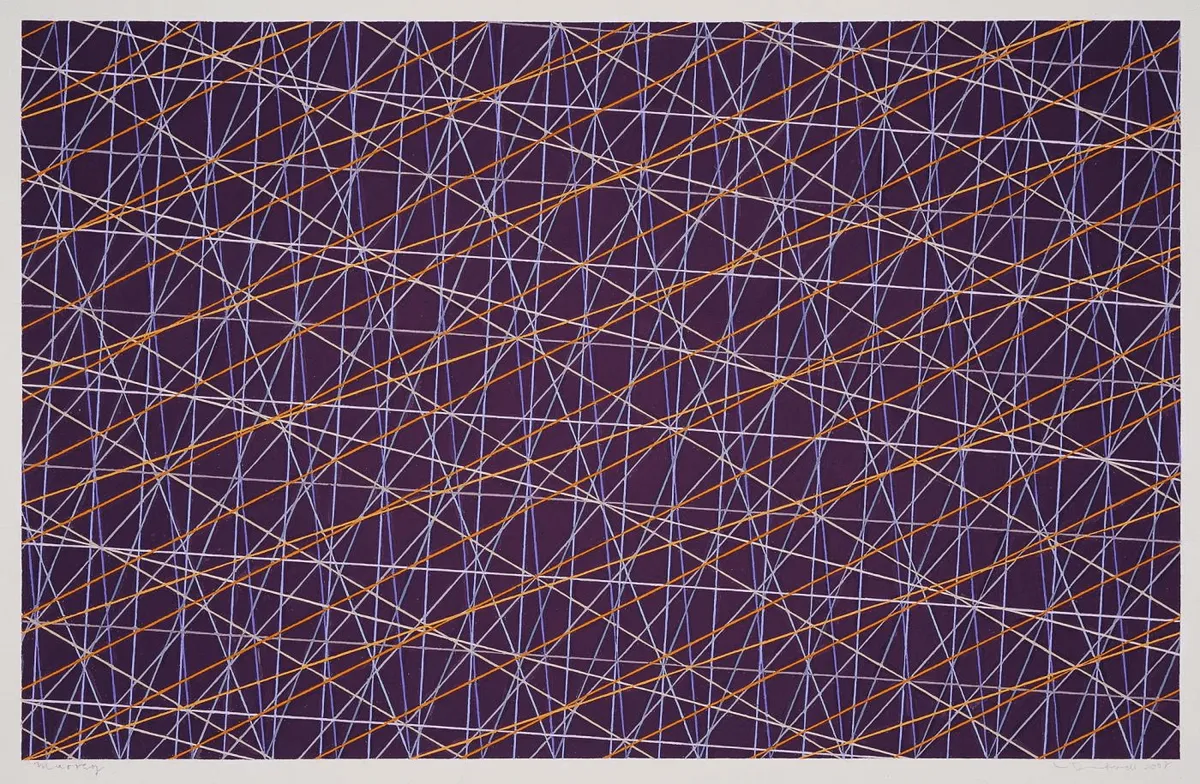
Murrey (2008), gouache on Arches paper, 46 × 72 cm
Murrey (2008), another gouache on paper work (46 × 72 cm), demonstrates the artist's continued exploration of colour harmonies and geometric abstraction in the intimate scale of works on paper.
Study for Cunmerian (2008), a gouache on paper work (38.5 × 73 cm), illustrates Dumbrell's method of working through complex colour and pattern relationships in a smaller, more immediate medium before committing to large-scale canvas works.
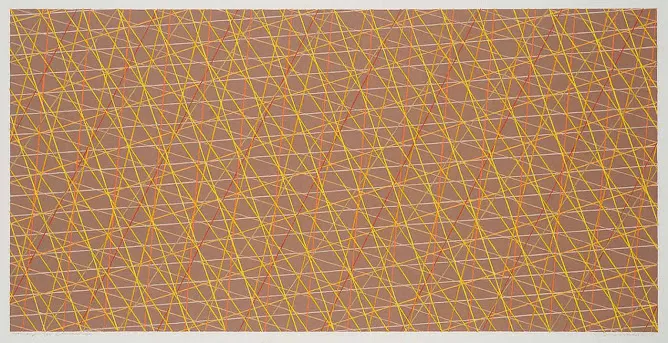
Study for Cunmerian (2008), gouache on paper, 38.5 × 73 cm.
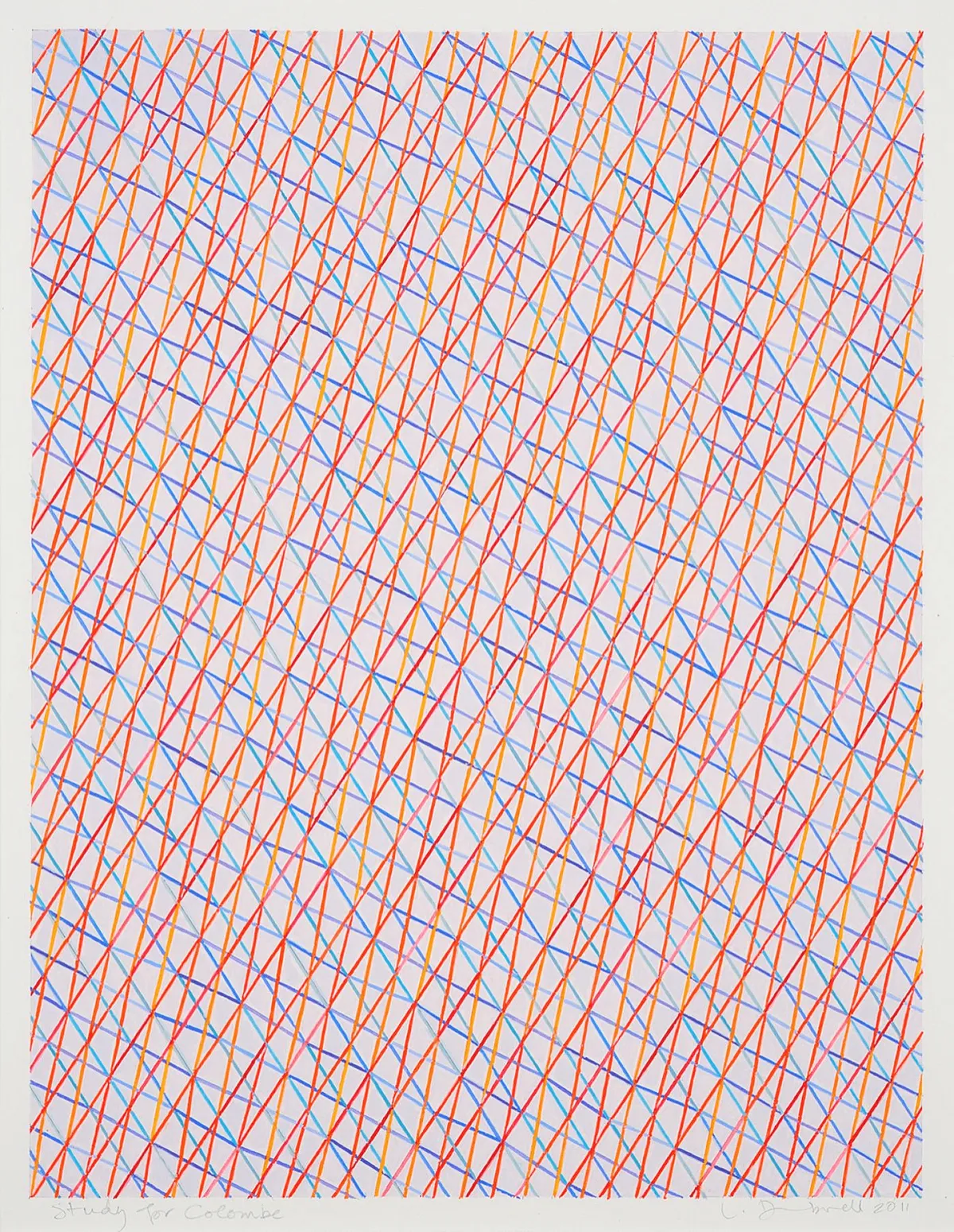
Study for Colombe (2011), gouache on paper, 42 × 32 cm.
Study for Colombe (2011) is a gouache on paper work (42 × 32 cm) that served as a preparatory study for the larger oil painting Colombe (2012). This work exemplifies Dumbrell's disciplined approach to planning colour relationships and geometric structures before executing them on canvas.
Aqua (2010), a gouache on paper work (51 × 51 cm), is a stand-alone piece that demonstrates Dumbrell's ability to create complete, resolved compositions in the watercolour medium. Aqua (2010) demonstrates this approach through its vibrant geometric composition and carefully controlled colour relationships, reflecting Dumbrell’s long-standing fascination with rhythm, optical movement and visual sensation.
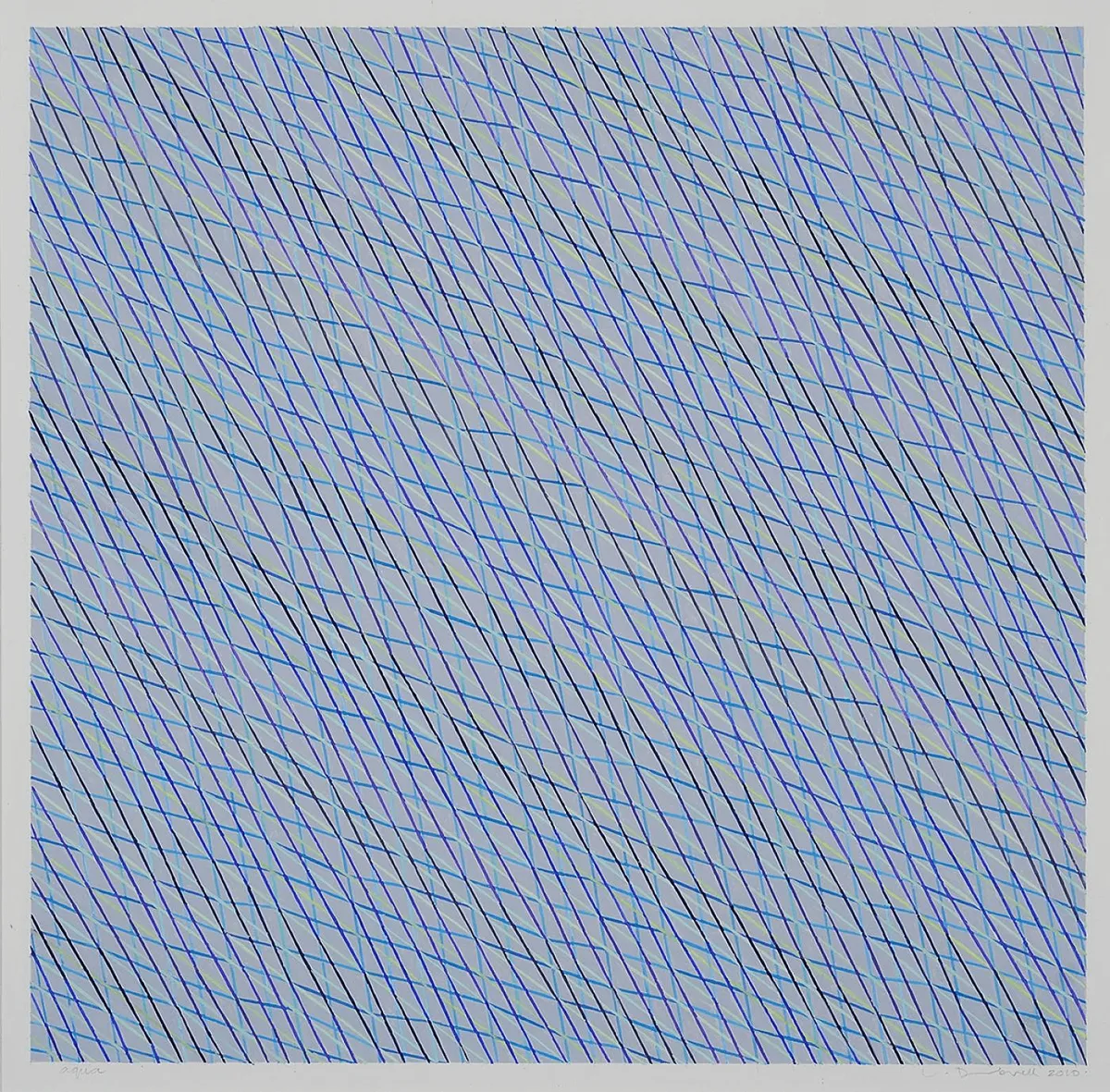
Aqua, 2010 — gouache on paper, 51 × 51 cm.
Lesley Dumbrell
THRUM
Dumbrell’s works create immersive experiences that transcend time. — Art Critic
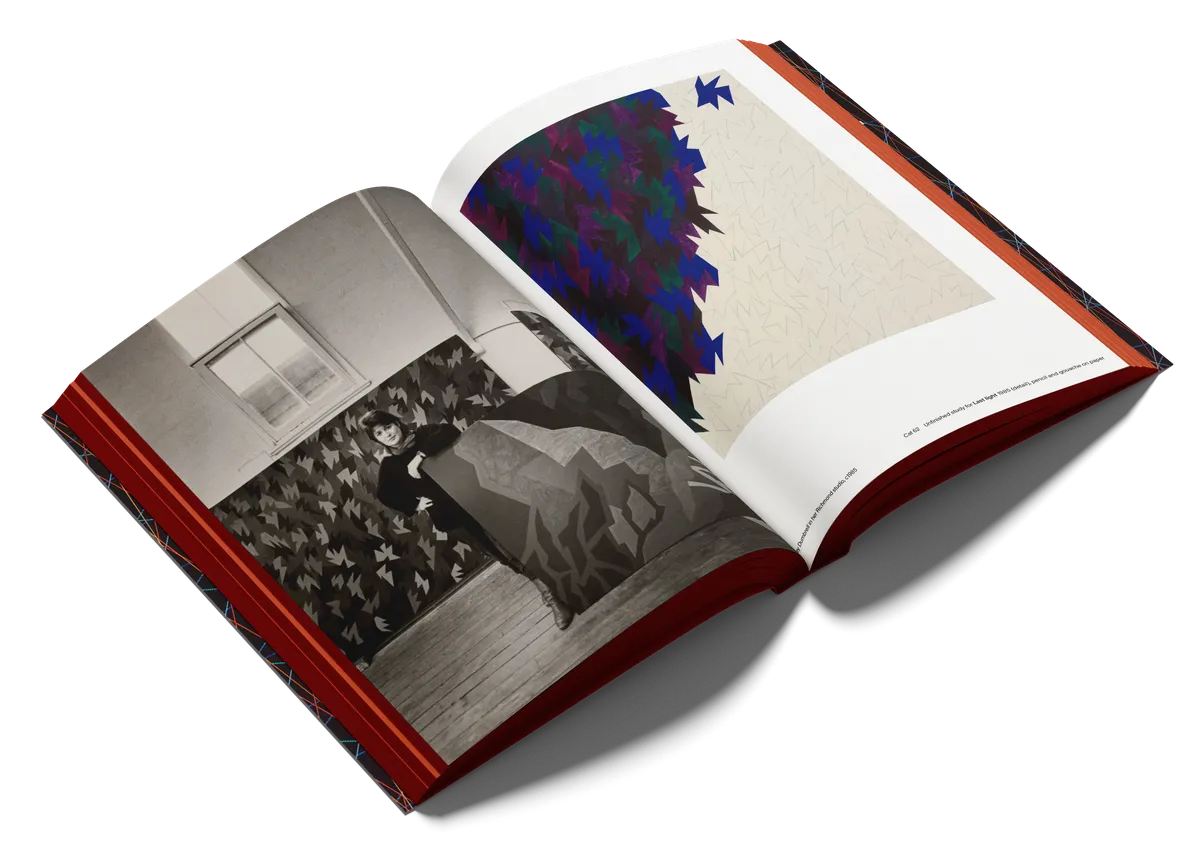
lesley's Archieve
Lesley's Works of Art Catalog
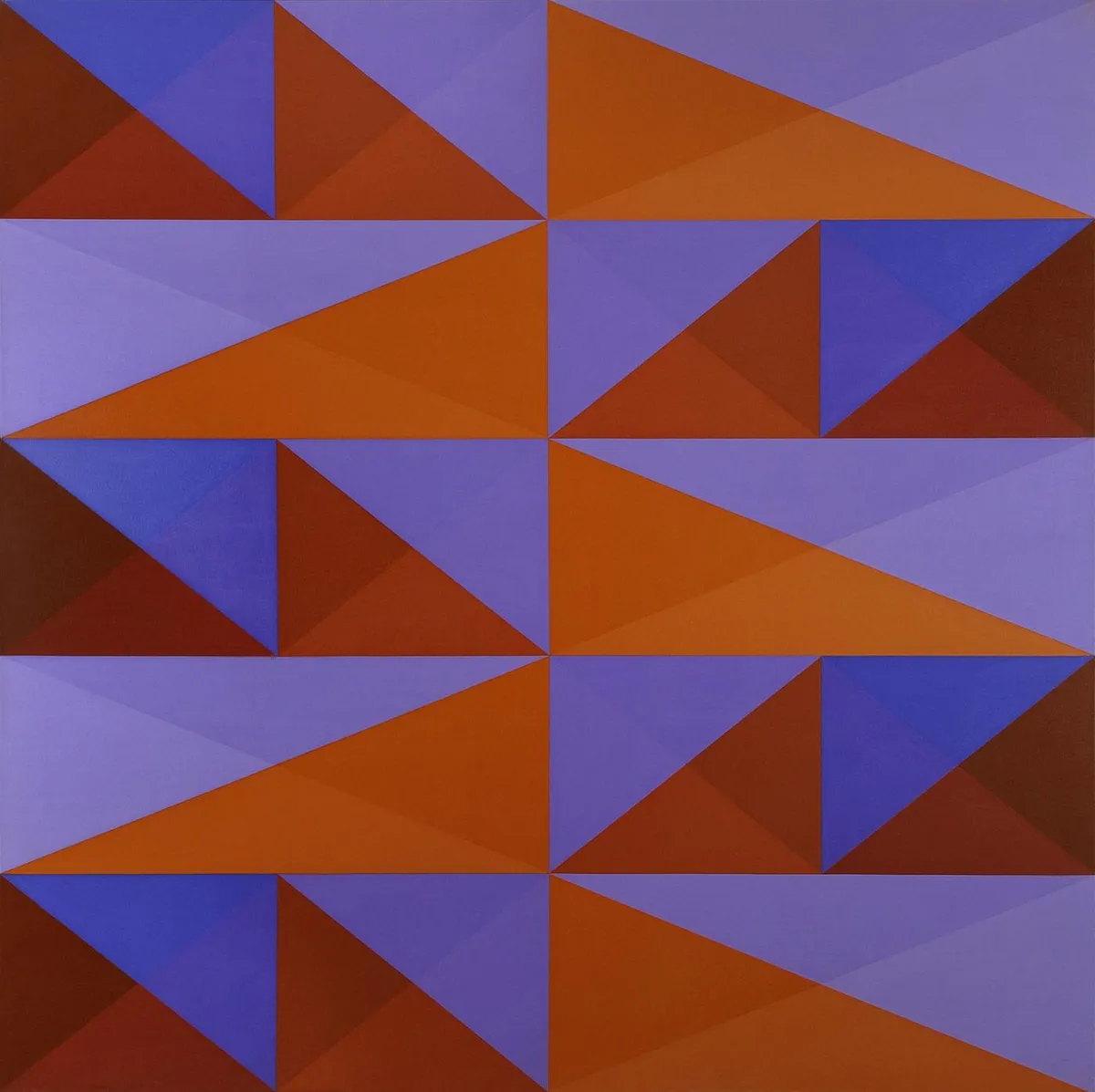
1968
Promontories
213.50 x 213.50 cm
Liquitex on canvas
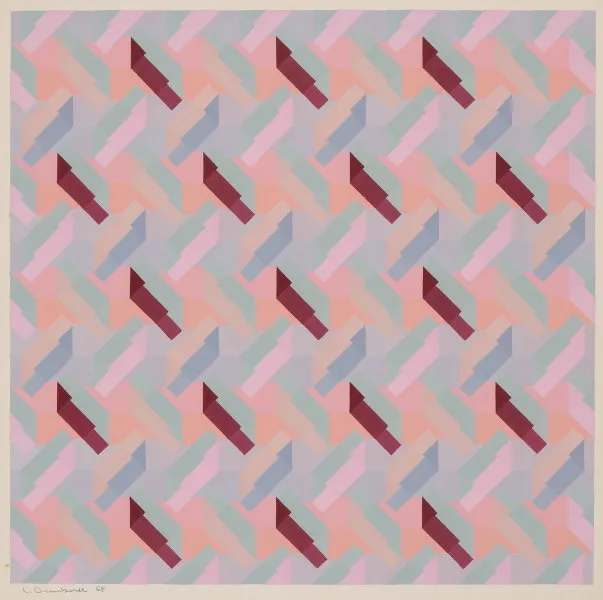
1968
Inroad II
43.0 x 43.3 cm
Pencil, Liquitex on canvas
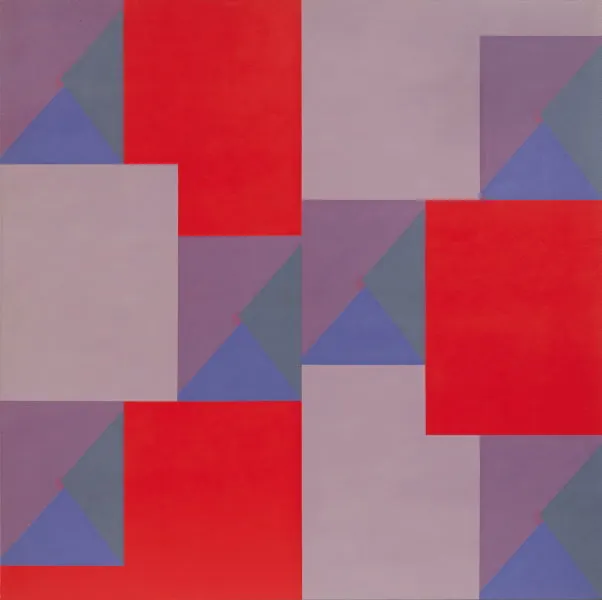
1969
Red shift
213.0 x 213.0 cm stretcher;
214.5 x 214.5 frame
Liquitex on canvas
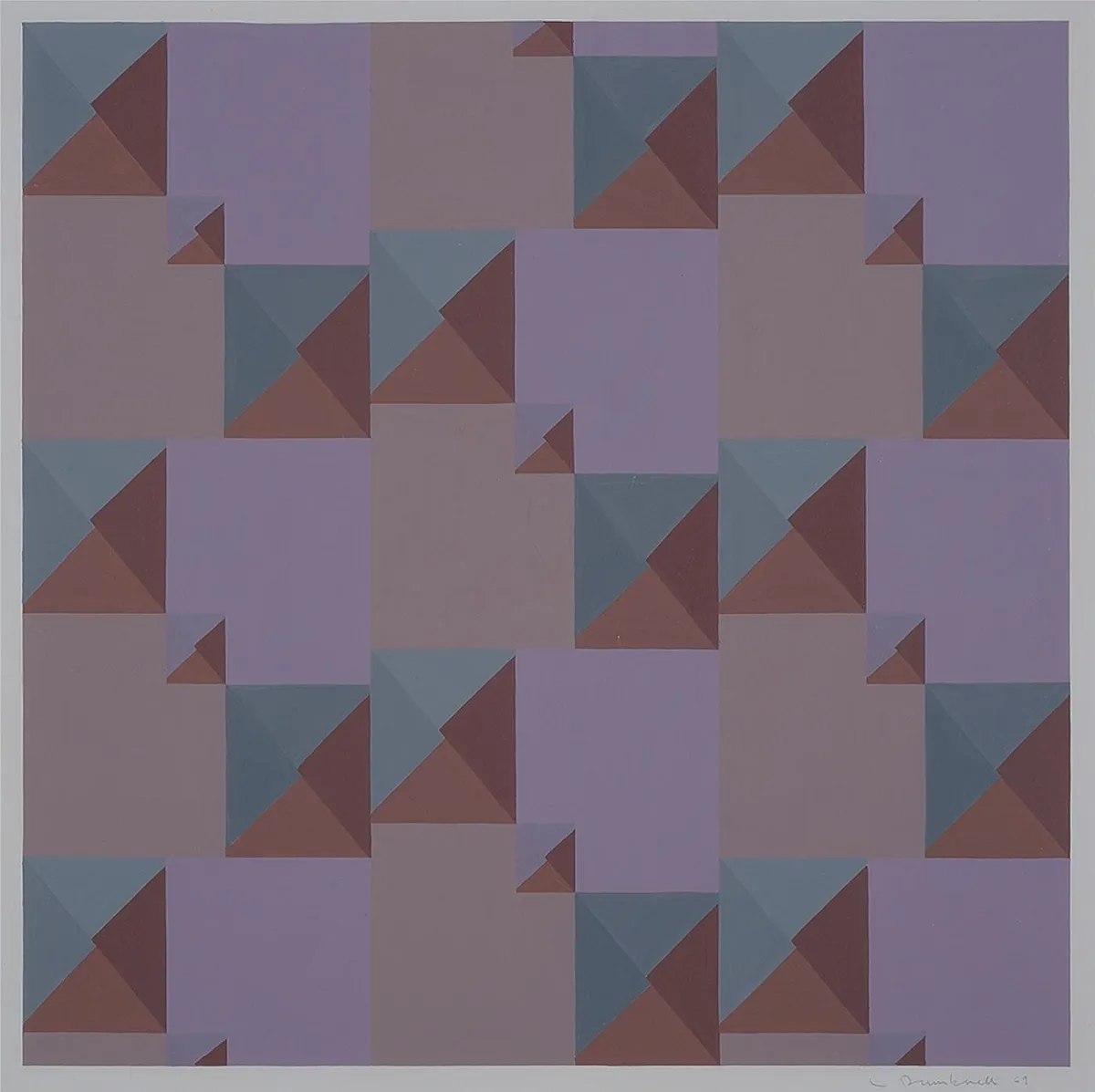
1969
Untitled
37.50 x 37.50 cm
Liquitex on paper
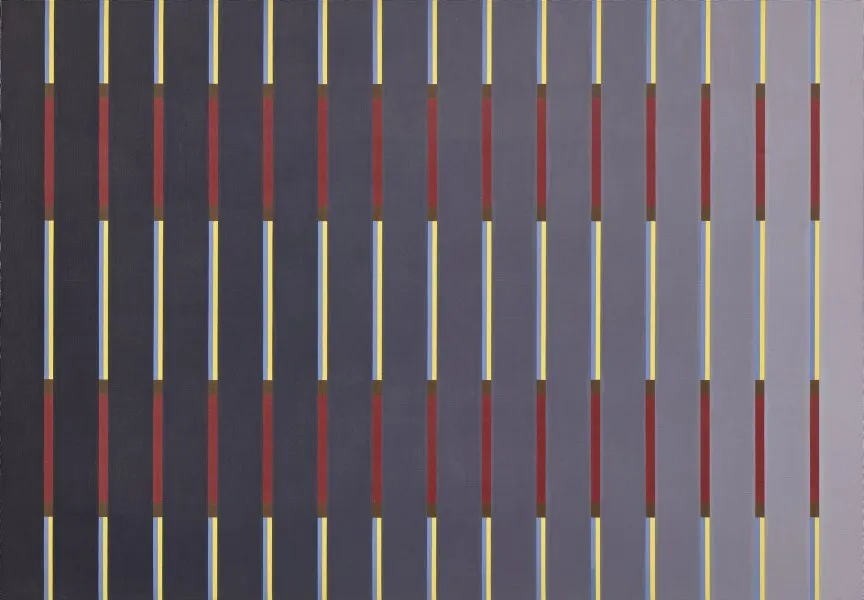
1971
Cadence
106.5 x 152.0 cm
Liquitex on canvas
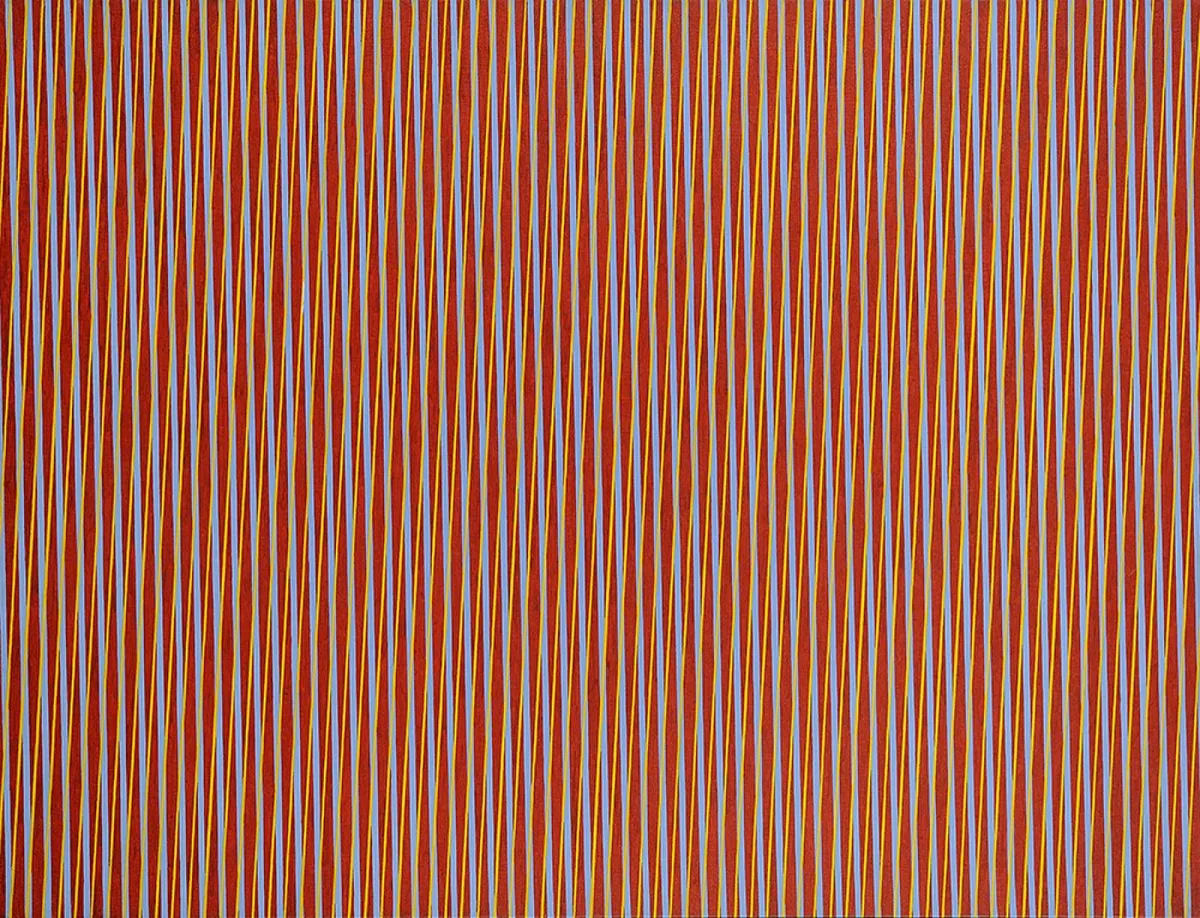
1973
Sirocco
85.50 x 109.50 cm
Liquitex on canvas
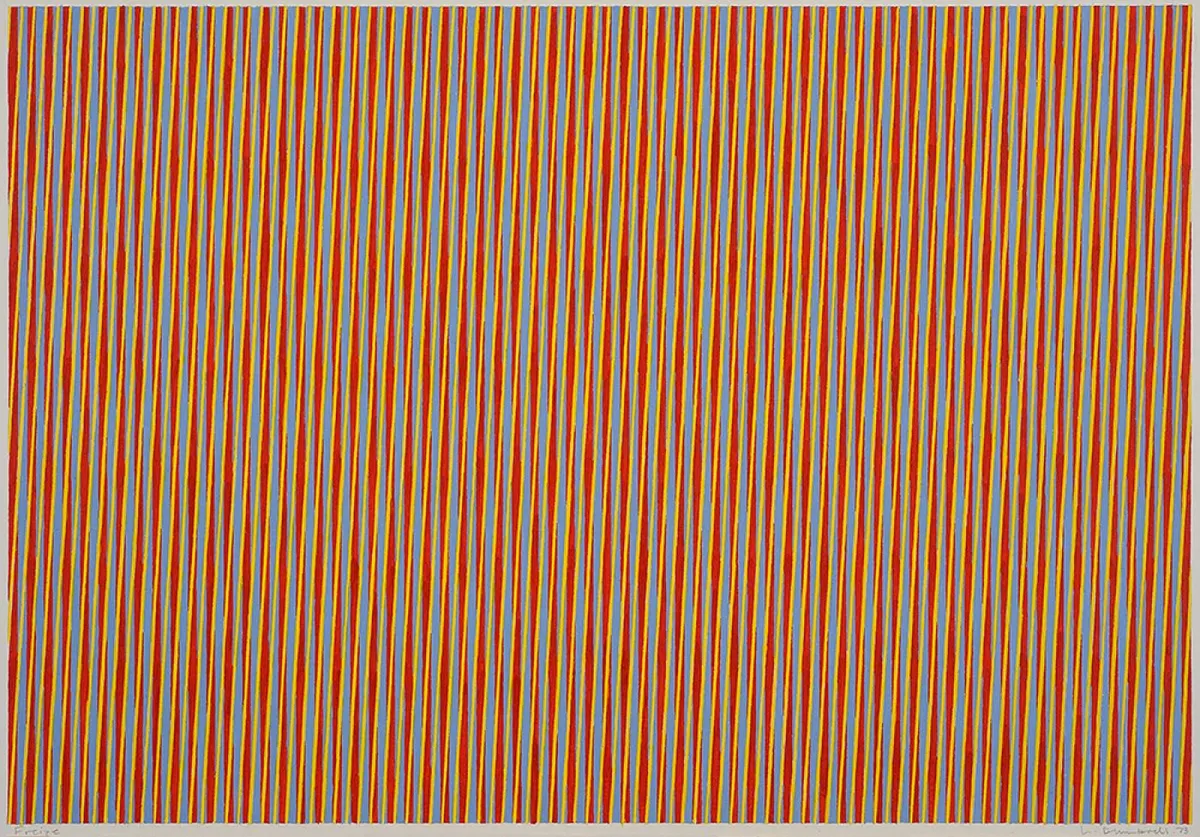
1973
Freize
43.00 x 62.00 cm
Pencil, Liquitex on canvas
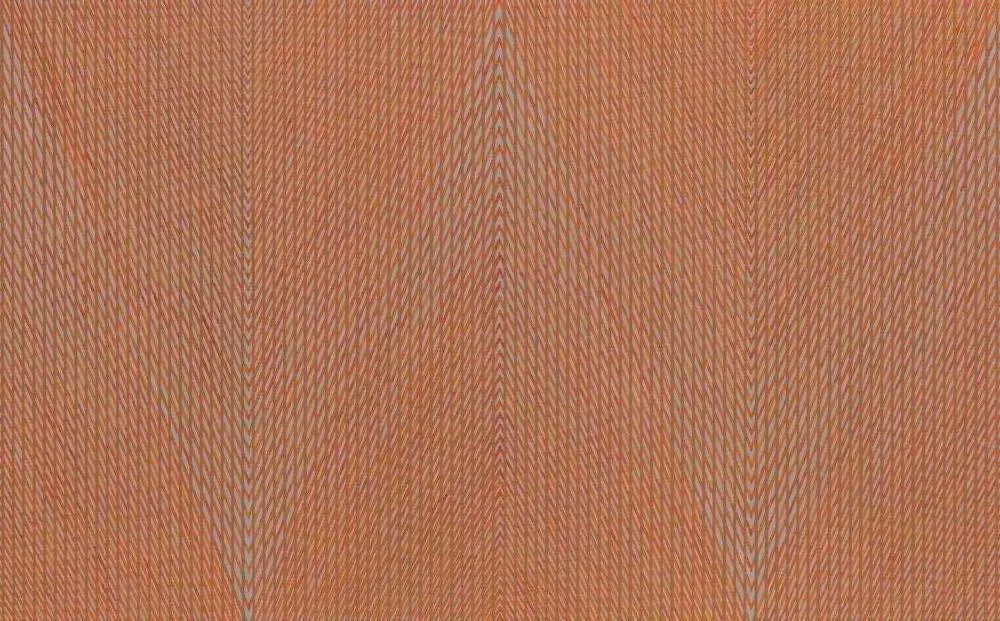
1973
Study for Khasim
38 x 60.5 cm
Synthetic polymer paint on paper
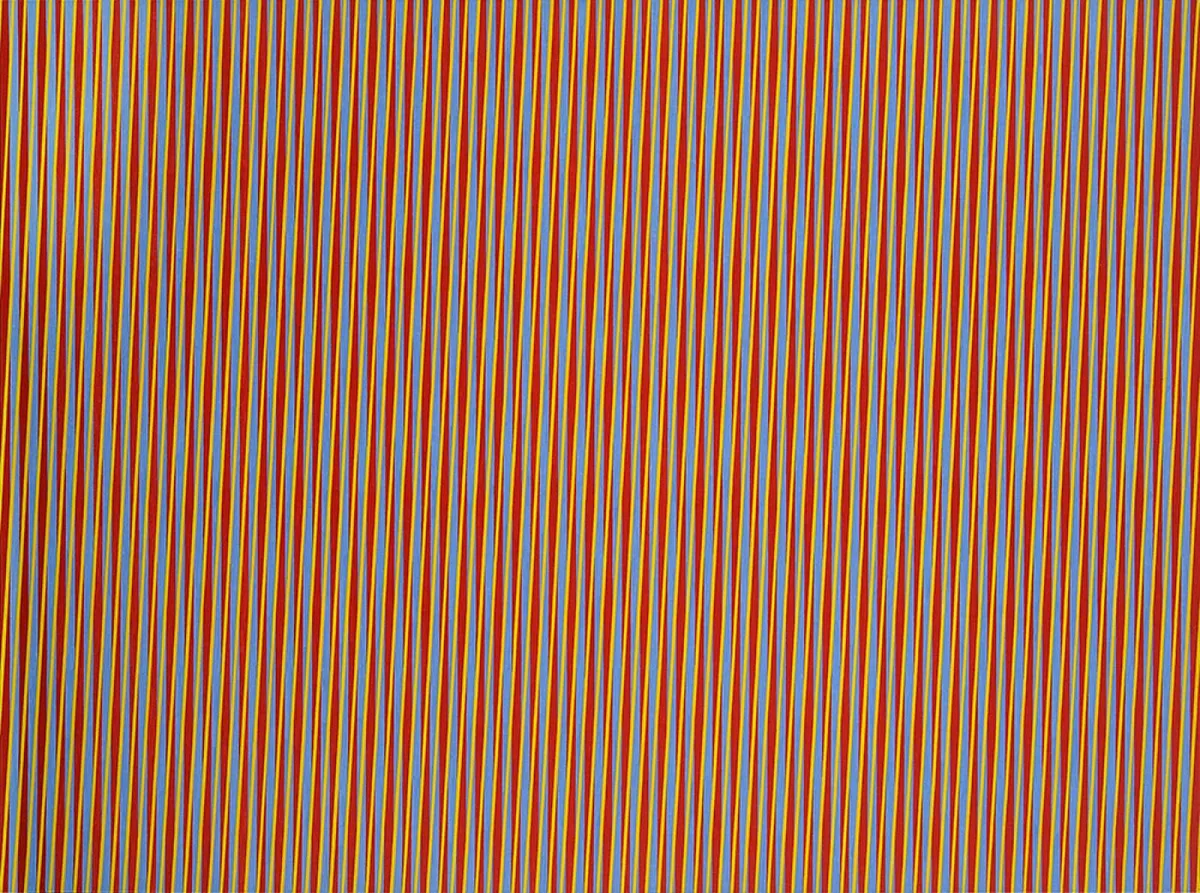
1974
Red Centre
129.50 x 187.50 cm
Liquitex on canvas
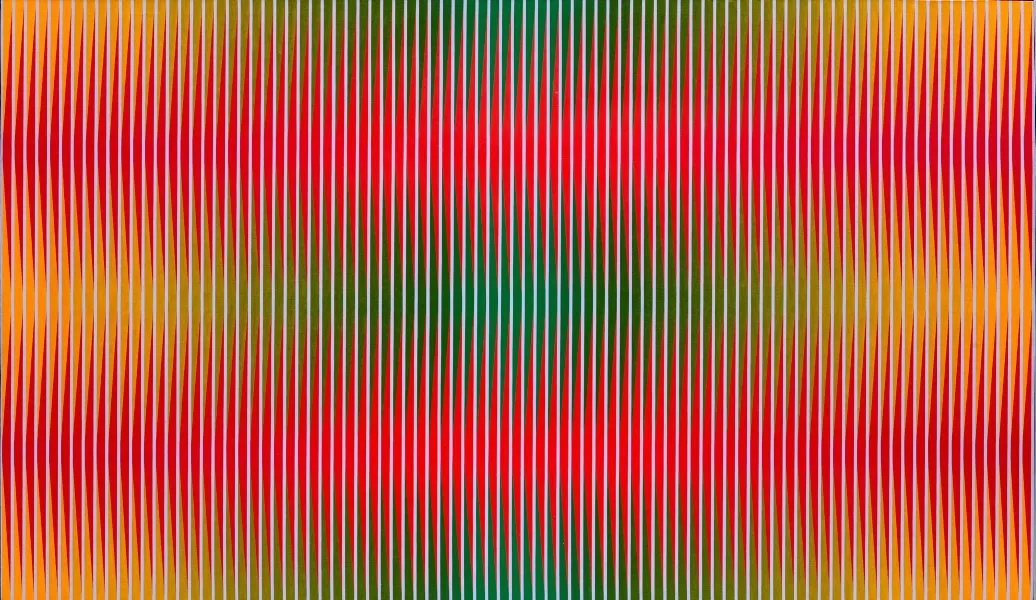
1974
Solstice
173.0 x 296.0 cm
Liquitex on paper
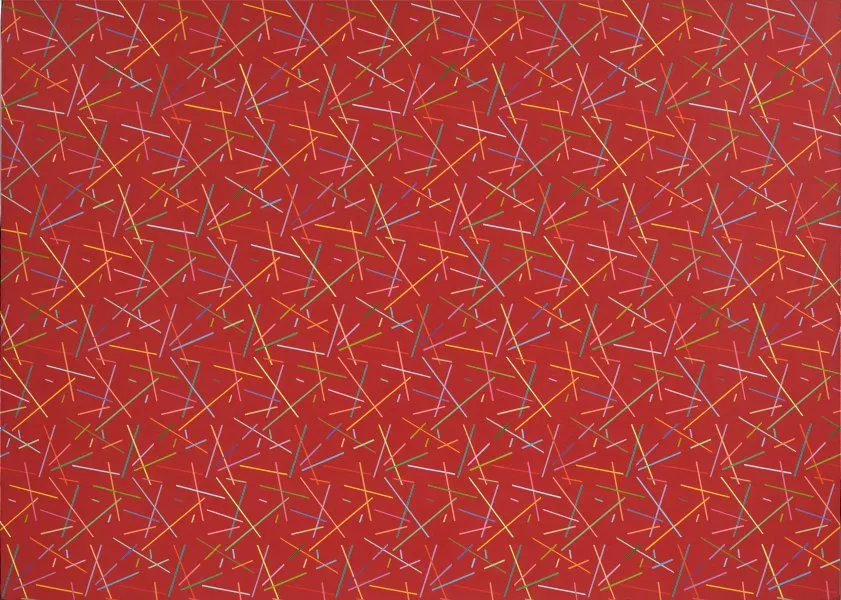
1977
Spangle
149.0 x 210.0 cm stretcher;
153.0 x 214.0 x 2.6 cm frame
Liquitex on paper
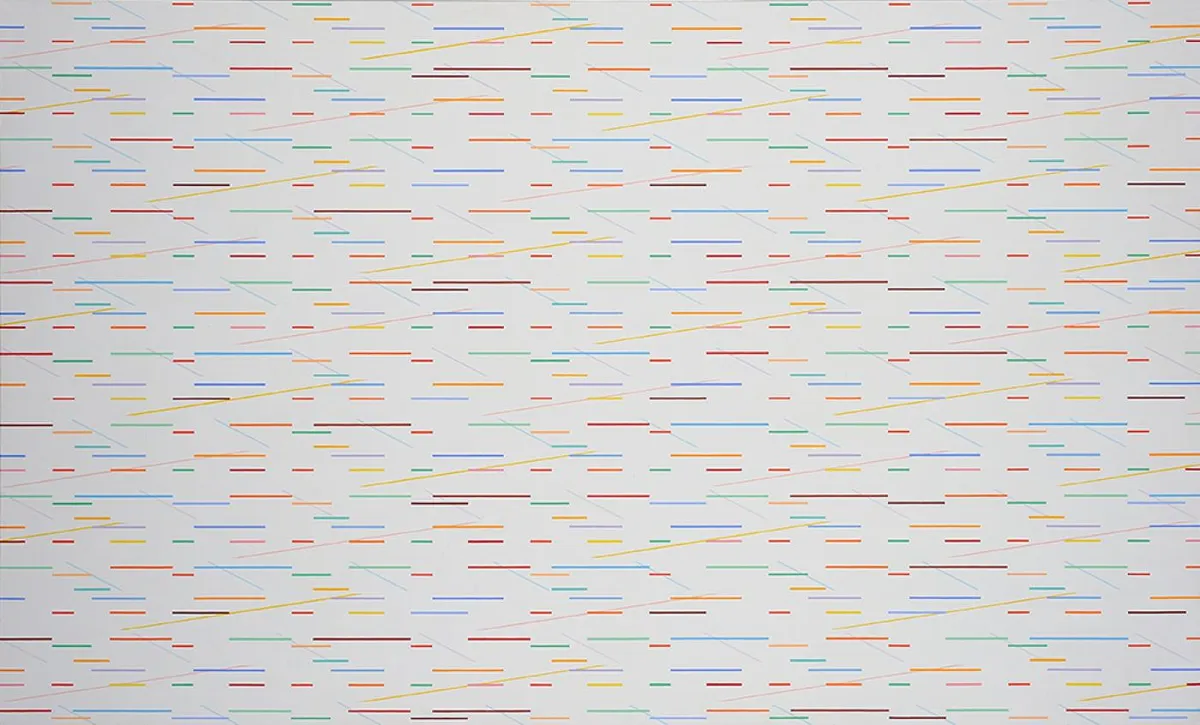
1977
Shoal
129.00 x 213.00 cm
Liquitex on canvas
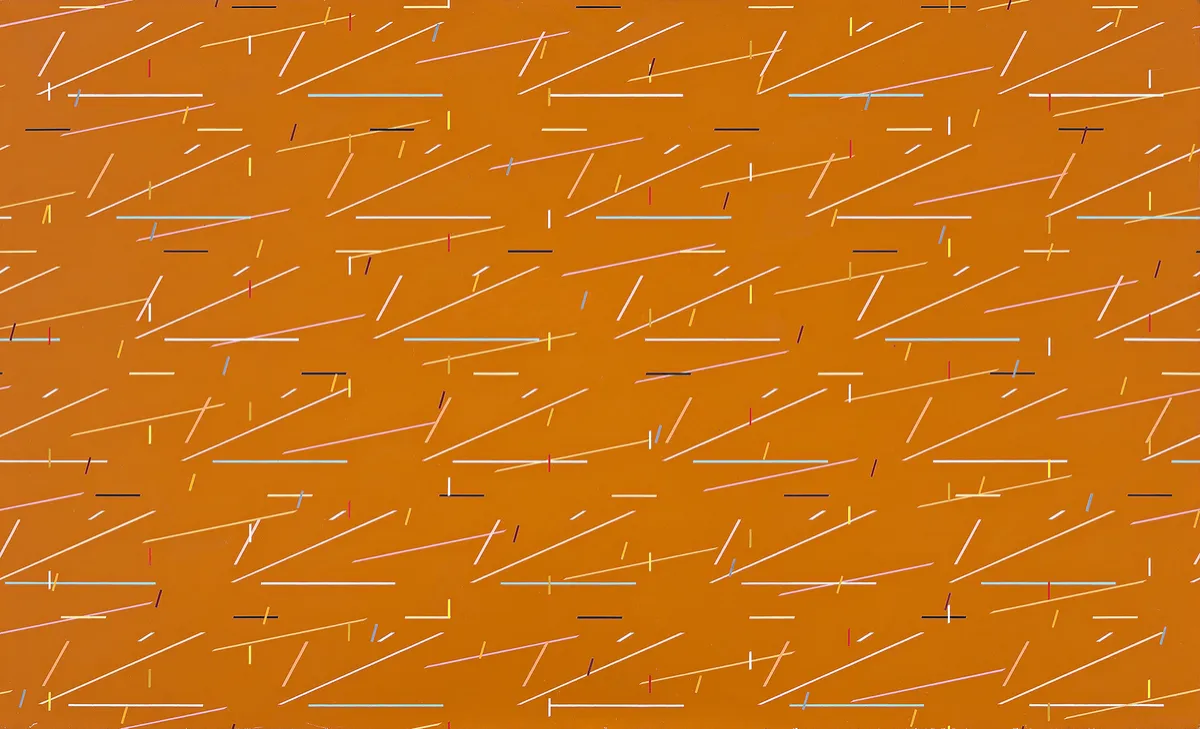
1977
Flint
130.0 x 213.5 cm
Synthetic polymer paint on linen
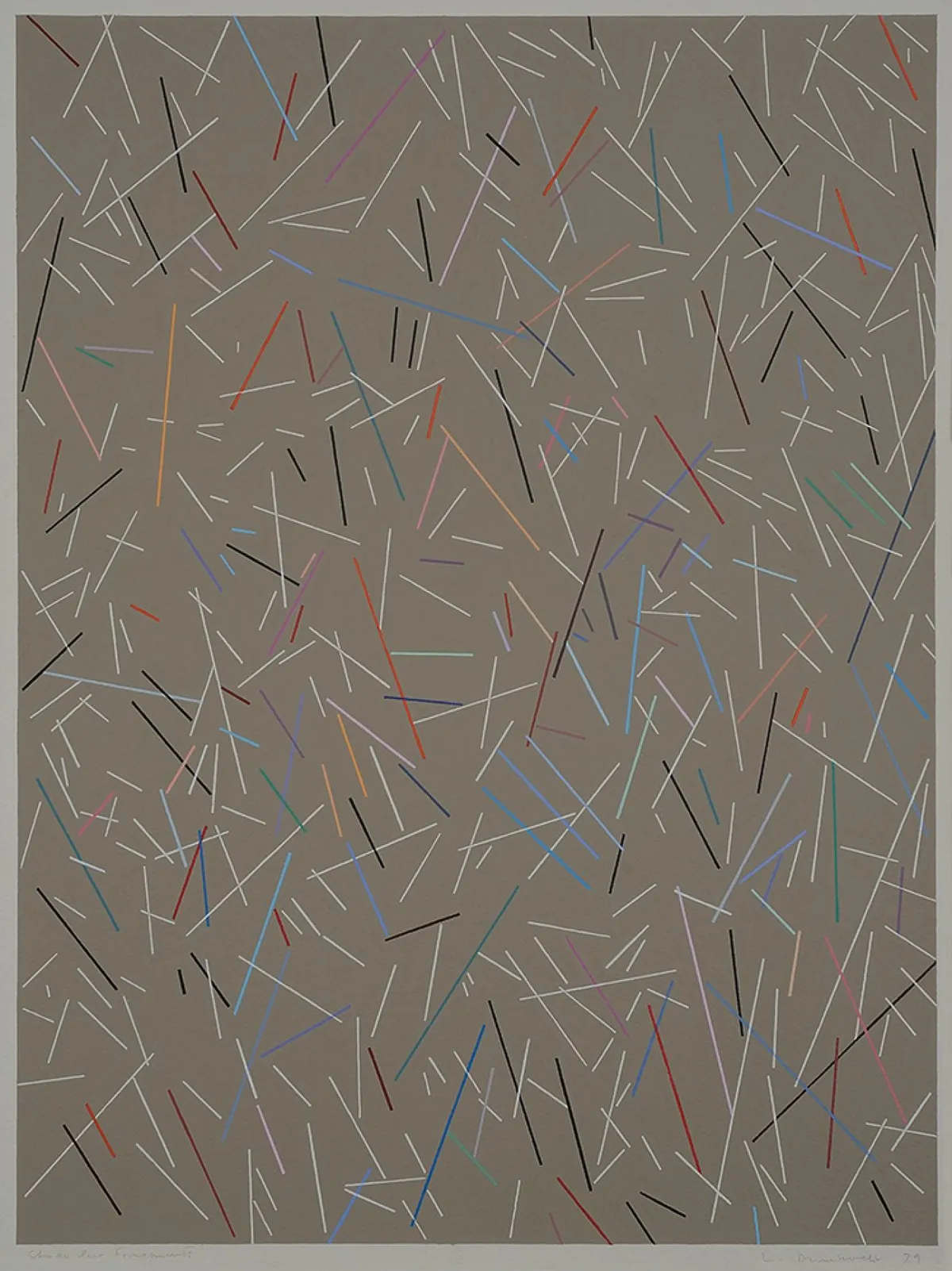
1979
Study for Fragments
60.00 x 45.00 cm
watercolour on paper
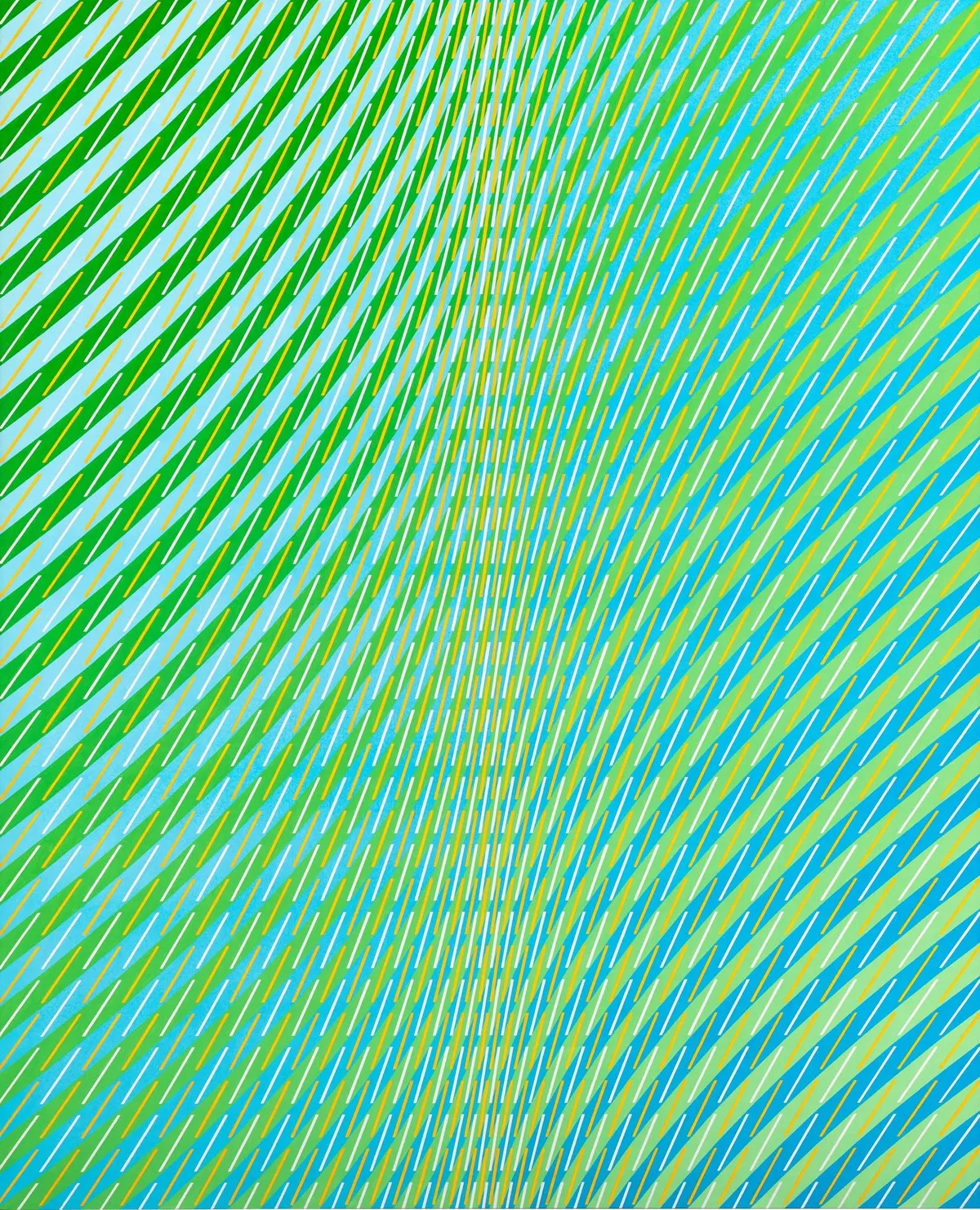
1975
Foehn
247.3 x 199.8 cm
Liquitex on paper
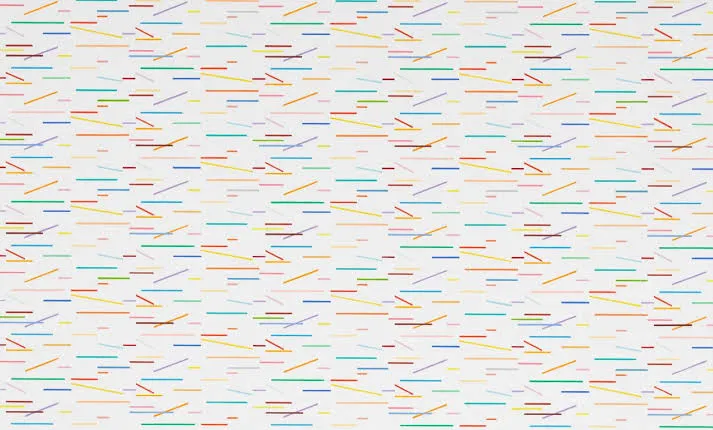
1979
cul-de-sac
197.8 x 151.8 cm [canvas];
198.4 x 153 cm
Liquitex on canvas
1977
White Study
40.7 × 67.1 cm (image)
56.4 × 76.0 cm (sheet)
Synthetic polymer paint over pencil
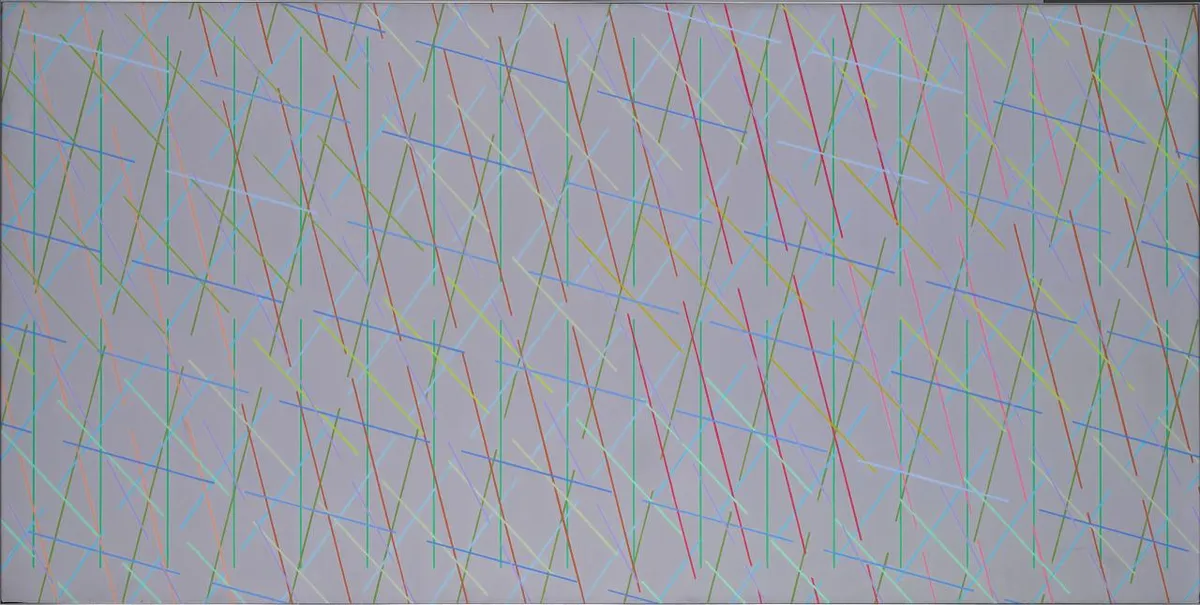
1978
Violet Morning
91.5 × 183.0 cm
Liquitex on canvas
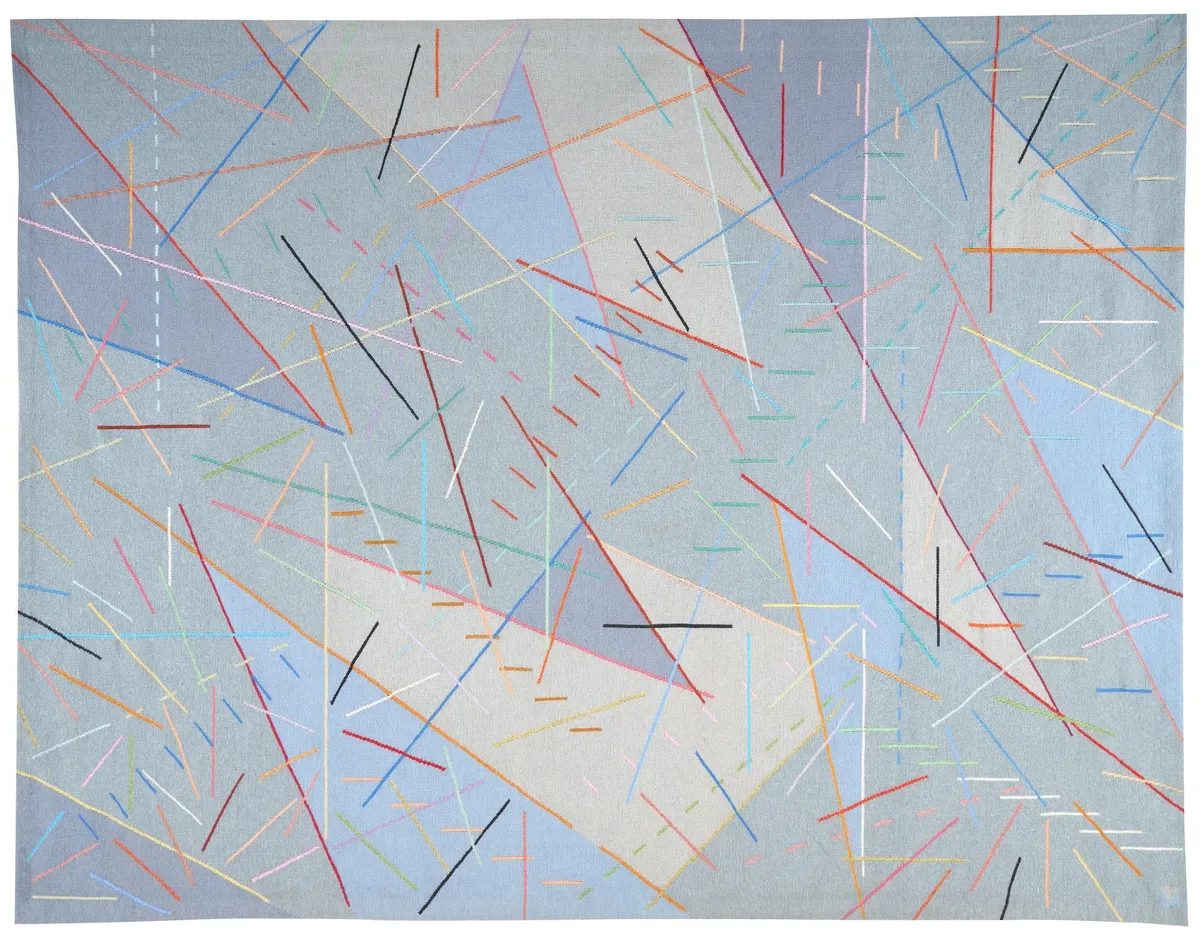
1979
Snakes and Ladders
181 x 235 cm
wool, linen, cotton, silk, lurex and rayon tapestry
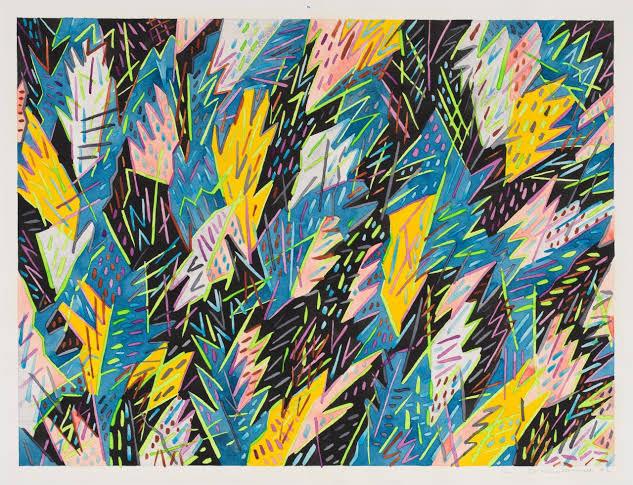
1982
Untitled
45.6 × 61.0 cm (image)
57.2 × 76.4 cm (sheet)
watercolour on paper
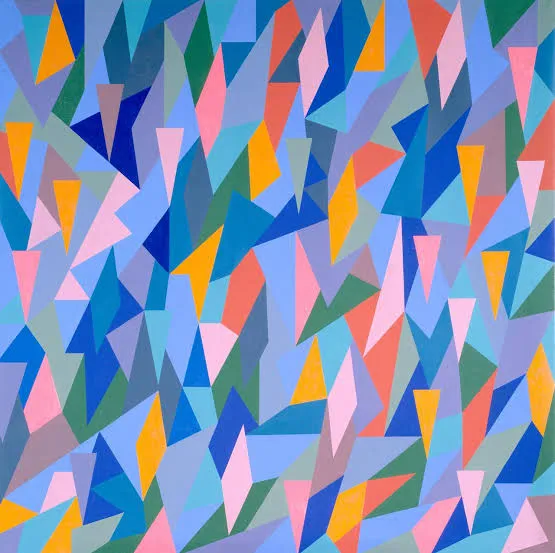
1987
Zavana
197.9 × 197.8 cm
Liquitex on canvas
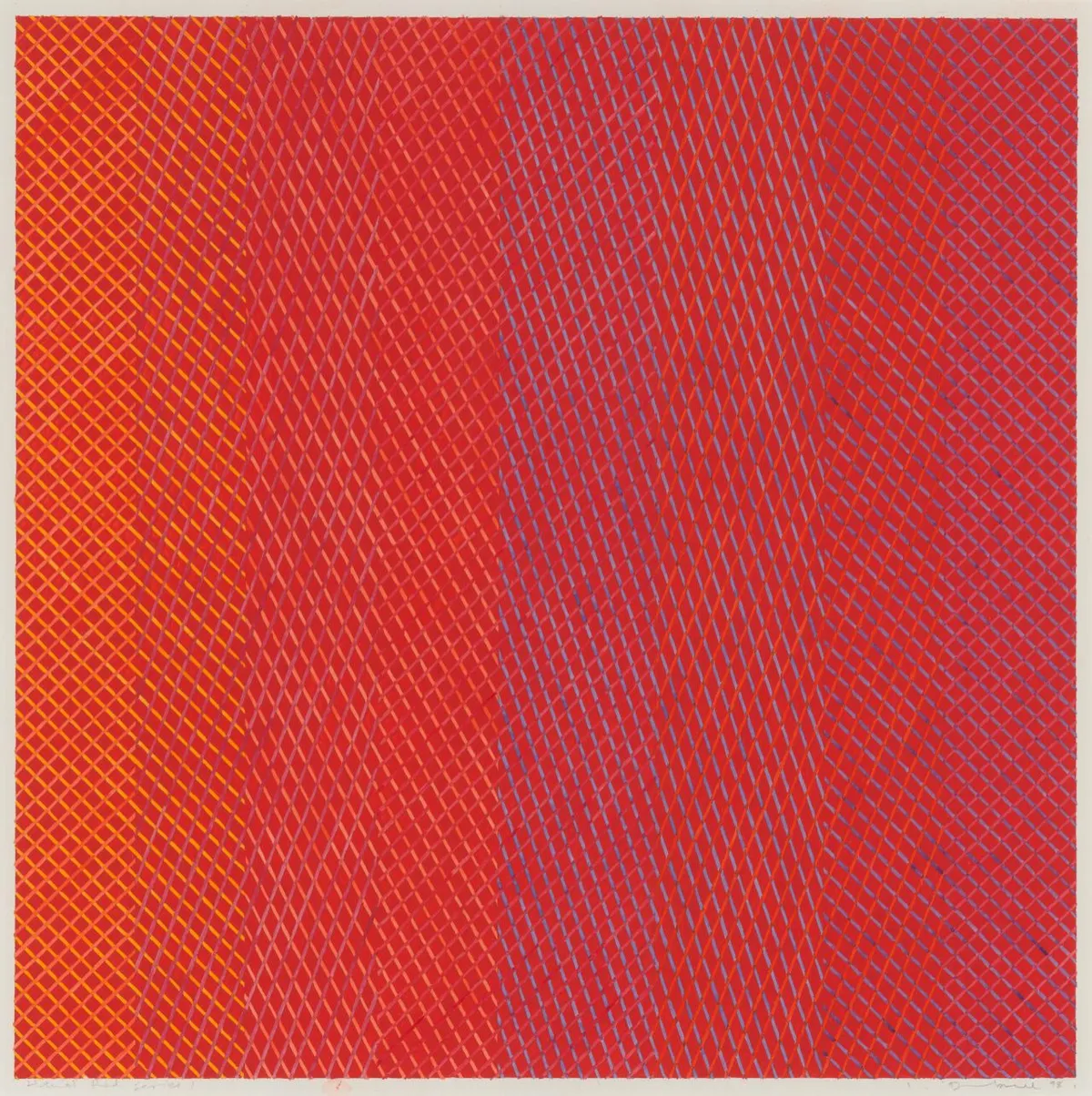
1998
Hanoi Red
197.8 × 197.8 cm
Oil on Canvas
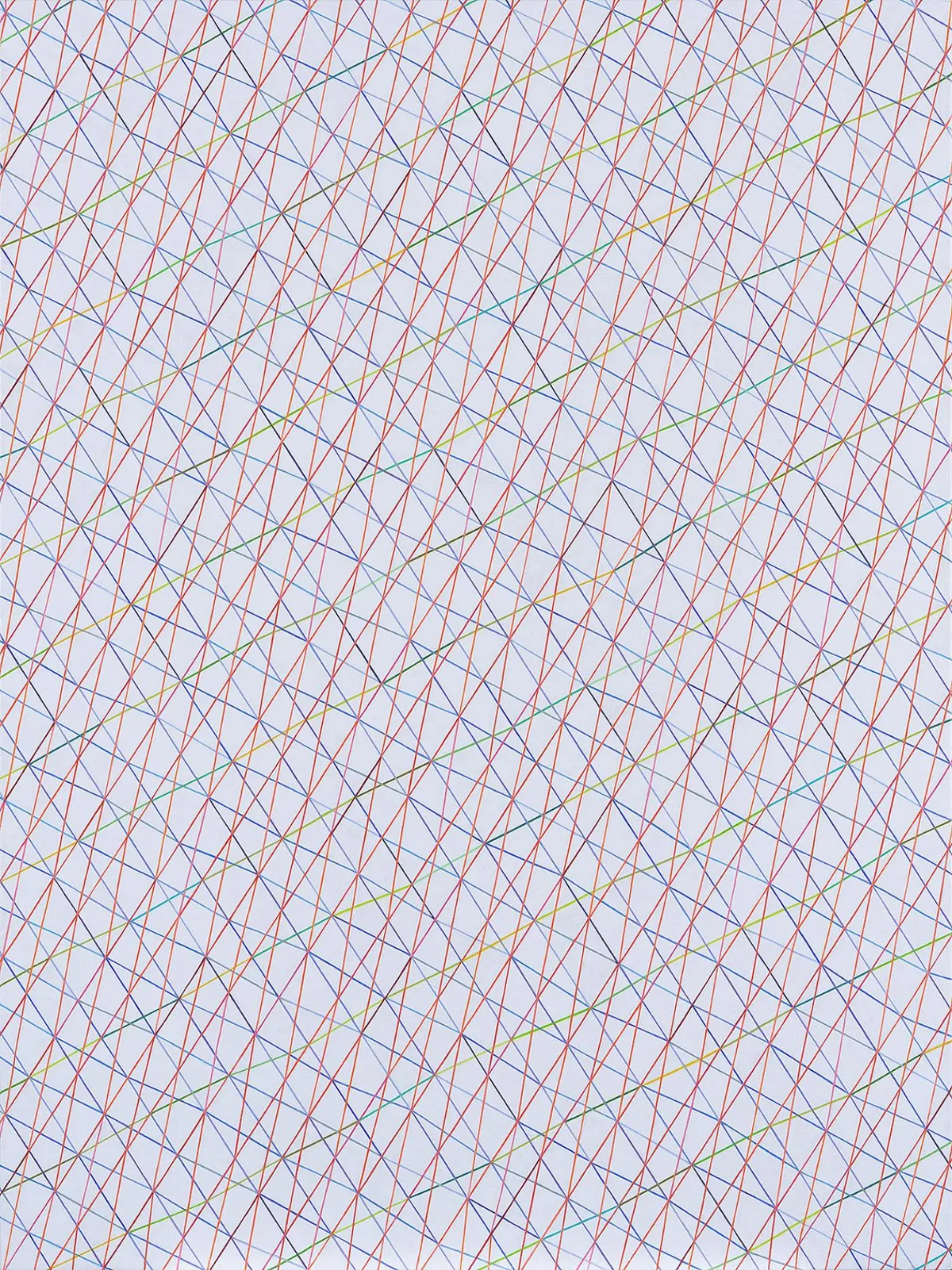
2012
Colombe
122.00 x 91.00 cm
pencil, gouache on card
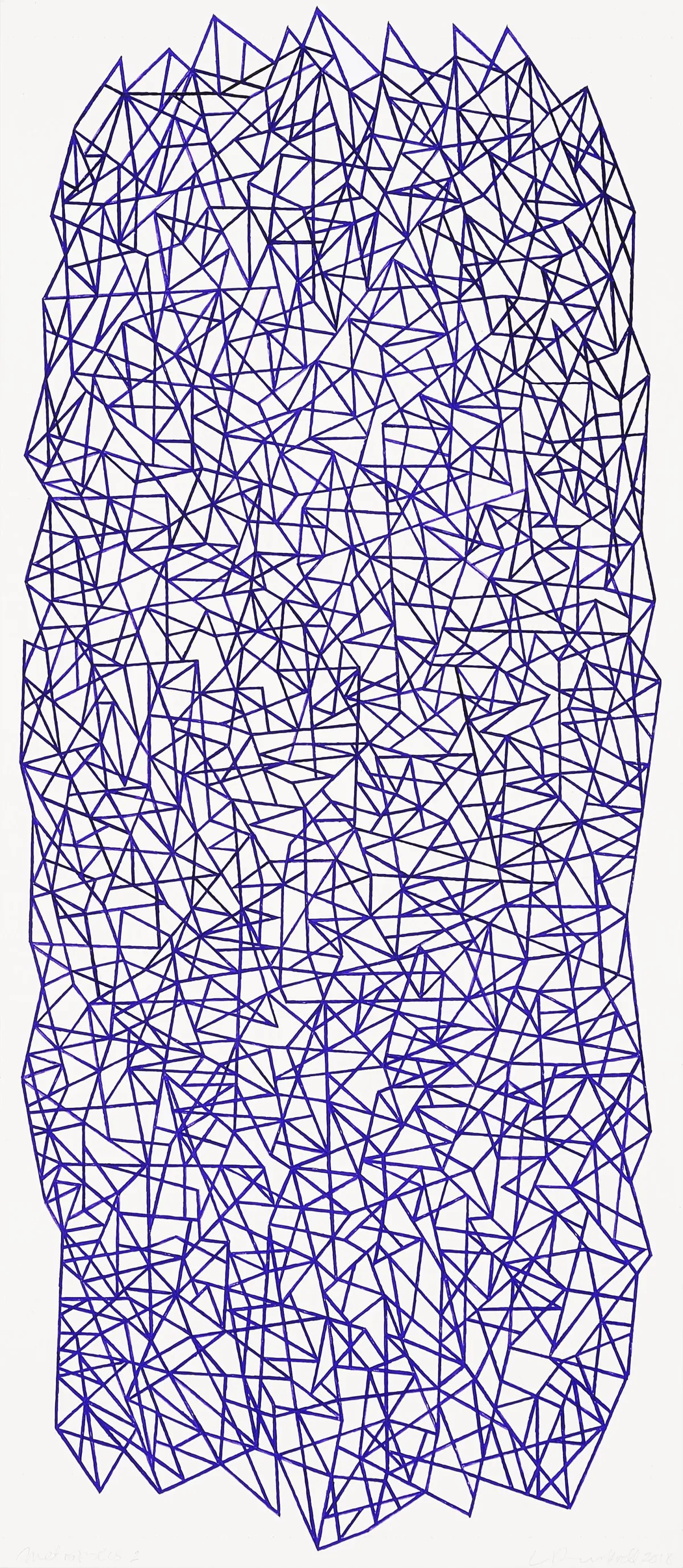
2018
Metropolis 2
75.00 x 33.00 cm
pencil, gouache on paper